
Where to Buy Locally Made Dog Treats: A 2026 Guide

Table of Contents
Why Locally Made Dog Treats Are Worth the Search
Where to Buy Locally Made Dog Treats: The Best Places to Look
Farmers Markets and Local Pet Bakeries
Local Pet Boutiques and Specialty Shops
Single Ingredient Dog Treats: The Simplest Way to Shop
How to Read Dog Treat Labels Like a Pro
What the Rules Actually Require
How to Verify a "Homemade" or "Local" Claim
Red Flags Worth Walking Away From
The Benefits of Small Batch Dog Treats
Nutritional Profile Comparison: Local vs. Mass-Produced Treats
Shipping vs. Local Pickup: Which Option Works for You?
Why Shelf Life Changes the Math
What to Confirm Before You Order Shipped Treats
Local Pickup: What You Actually Get
A Practical Hybrid
Matching the Option to Your Dog
Allergy-Friendly Local Sourcing: What to Look For
Conclusion
Frequently Asked Questions
Last Updated: October 1, 2026
Why Locally Made Dog Treats Are Worth the Search
Walk down the pet aisle of any big-box store and you'll see hundreds of bags, most of them made in facilities you'll never visit, from ingredients sourced from places you'll never see. That's exactly why so many dog owners have started asking where to buy locally made dog treats instead. This guide from Five Local Dogs breaks down the best places to look, how to read a label without a nutrition degree, and why small-batch production changes what's actually inside the bag.
Locally made dog treats are snacks produced by small, regional makers who source ingredients close to home and typically bake, dehydrate, or slice in limited runs rather than industrial volumes. The appeal is simple: shorter supply chains, fresher product, and a maker you can actually talk to.
Here's the catch most guides skip. "Local" and "healthy" are not the same word, and a farm stand sign doesn't guarantee a single-ingredient product. You still have to read the label.
Below, we'll walk through the specific places to shop, the questions to ask a vendor, and how to compare a local biscuit against a mass-produced one on the metrics that matter.
Where to Buy Locally Made Dog Treats: The Best Places to Look
The best places to find locally made dog treats are farmers markets, independent pet bakeries, and specialty pet boutiques. Each offers a different mix of selection, freshness, and face-to-face access to the person who made the product.
Farmers markets and pet bakeries tend to carry the freshest, smallest-run items. Boutiques and specialty shops offer more variety and shelf-stable options. Many owners use both: markets for weekly fresh buys, shops for stocking up.

Farmers Markets and Local Pet Bakeries
Farmers markets are the single best starting point because you meet the maker directly. You can ask how the treats were prepared, what's in them, and how long they stay fresh, questions a shelf tag can't answer.
Local pet bakeries take this further with dedicated storefronts and consistent weekly baking schedules. Many post their ingredient lists in-store and welcome questions about sourcing.
A practical tip: go early. Small-batch vendors often sell out by mid-morning, and the person behind the table is usually the owner, not a part-time cashier who can't answer sourcing questions.
Local Pet Boutiques and Specialty Shops
Independent pet boutiques act as curated hubs for regional makers. Instead of one brand, you'll often find a rotating shelf of products from several small producers in the area.
The advantage here is variety and convenience. The trade-off is that you're one step removed from the maker, so ask staff which items are genuinely local versus nationally distributed products with a rustic-looking label.
Pro Tip Ask the vendor how often they restock. A boutique that turns its local shelf weekly is a better sign than one with dust on the jars. Freshness is the whole point of buying local.
Single Ingredient Dog Treats: The Simplest Way to Shop
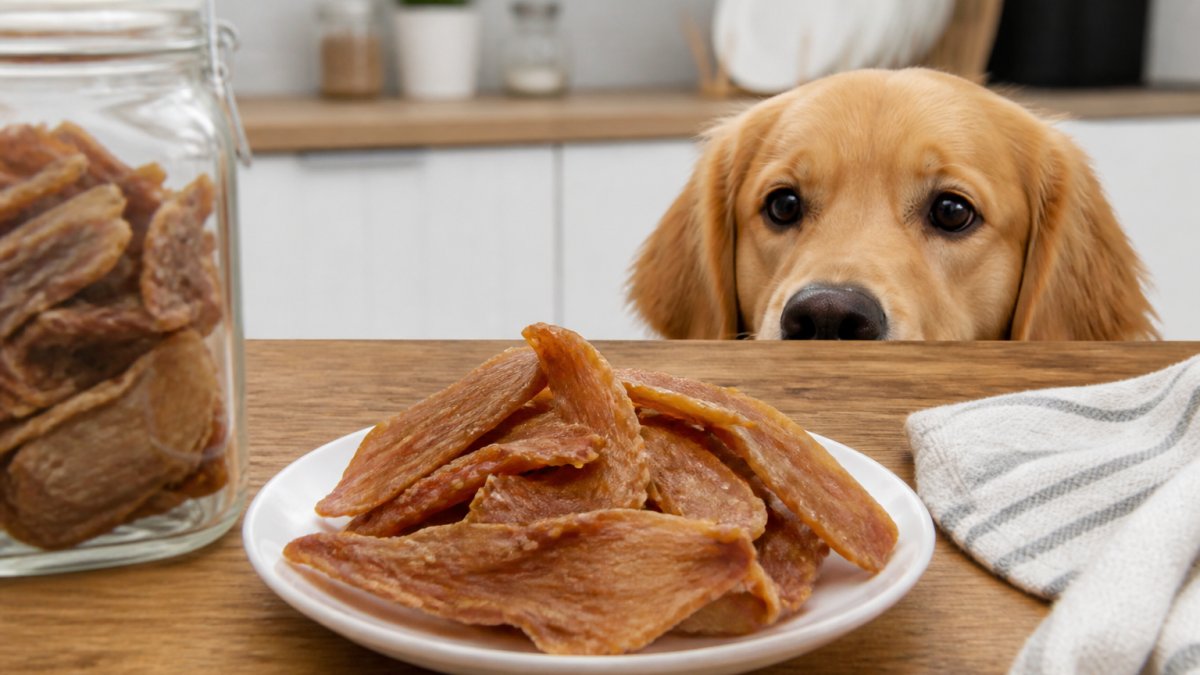
Single ingredient dog treats contain exactly one item, such as dehydrated chicken, and nothing else. No fillers, no coatings, no preservatives. That simplicity is why they're the easiest category to shop confidently, especially for dogs with sensitive stomachs.
The logic is straightforward. When a treat has one ingredient, there's nothing hidden to trigger a reaction, and nothing to decode on the label. For owners of picky or allergy-prone dogs, that removes most of the guesswork.
Five Local Dogs builds its entire line around this idea: hand-sliced, dehydrated chicken with no preservatives or artificial coatings, produced in small batches for consistency. If your dog has rejected treat after treat, a single-ingredient option is often the cleanest place to restart.
When shopping, look for a label that lists one thing and one thing only. If you see "chicken, natural flavors, mixed tocopherols," that's three ingredients, not one.
How to Read Dog Treat Labels Like a Pro
Reading a dog treat label well means checking four things in order: the ingredient list, the guaranteed analysis, the sourcing statement, and the freshness or storage guidance. Most owners only check the first one. The section below walks through each, then explains how to verify a "homemade" or "local" claim when there's no national brand behind it.
Start with ingredients. They're listed by weight, so the first item is what the treat mostly is. A short list is generally a good sign, but short doesn't automatically mean safe, a two-item treat can still contain a protein your dog reacts to.
Next, look at the guaranteed analysis for protein, fat, and fiber percentages. Then find where the protein was sourced. Finally, check whether the package tells you how to store the product and how long it keeps.
Here's a quick reference for what to look for:
Label Element | What to Check | Why It Matters |
Ingredient list | Length and order | First item = largest by weight |
Guaranteed analysis | Protein, fat, fiber % | Confirms nutritional profile |
Sourcing statement | Country or region of origin | Verifies where protein came from |
Storage guidance | Refrigeration, shelf life | Tells you how to keep it fresh |
Net quantity statement | Weight in ounces or pounds | Lets you compare value across sizes |
Manufacturer or distributor | Name and address | Tells you who is accountable for the batch |
What the Rules Actually Require
Pet treats sold commercially fall under the same federal labeling framework as pet food. The FDA pet food information explains that labels must carry a product name, a net quantity statement, a guaranteed analysis, an ingredient list, and the name and address of the manufacturer or distributor. Those are the floor, not a quality signal, a bag can meet every requirement and still be built around fillers.
Two terms trip people up. "Natural" is a defined claim with specific conditions, but it says nothing about sourcing, batch size, or whether the protein was raised with antibiotics. "Organic" is a stronger, certified claim, if a maker uses it, there should be a certifier behind it. If a small vendor uses "organic" loosely on a handwritten sign, ask which certifying body signed off.
How to Verify a "Homemade" or "Local" Claim
This is the part most guides skip. A farm stand sign is marketing, not a guarantee. Here's a short verification routine you can run in about two minutes at any stall or counter:
Ask for the ingredient list in writing. A serious maker has it printed or can text it to you. A vague verbal answer is a yellow flag.
Ask where the protein was raised or caught. "A farm up the road" is fine if they can name it. "We source from a supplier" is not the same answer.
Ask about the production space. Is it a licensed commercial kitchen, a shared facility, or a home kitchen? Home kitchens aren't automatically unsafe, but they're harder to inspect and cross-contact risk is higher.
Ask about batch dates. Fresh treats should have a made-on or best-by date. If there's no date at all, you can't judge freshness.
Ask how they handle a problem batch. A maker who has a recall or refund process has thought about accountability. A maker who shrugs hasn't.
Watch Out A "natural" claim on the front of a bag is not a regulated guarantee of quality. It says nothing about sourcing, batch size, or additives. Always flip the package over and read the actual ingredient panel, and if the panel isn't there, that's your answer.
Red Flags Worth Walking Away From
No ingredient list anywhere on the package or the sign.
No maker name or contact information.
A protein source described only as "meat" or "poultry" without specifying the animal.
Treats stored in open bins with no date and no covering.
A vendor who can't tell you whether the product contains a common allergen like wheat, dairy, or peanut.
None of these are proof of a bad product. Together, though, they're a pattern, and there are usually other vendors at the same market who can answer every one of these questions without hesitating.
The Benefits of Small Batch Dog Treats
Small-batch production means a maker produces treats in limited runs rather than continuous industrial volumes. The benefits of small batch dog treats come down to consistency, freshness, and accountability.
Smaller runs are easier to monitor. A maker producing a few hundred units can inspect each batch, adjust for variation in raw ingredients, and catch problems before they ship. Large-scale lines optimize for volume and shelf stability, which often means adding preservatives.
Freshness is the second advantage. Small-batch items are typically made closer to the point of sale, so they spend less time in warehouses. That matters for texture, aroma, and how appealing the treat is to a picky dog.
Accountability is the third. When you buy from a local maker, there's a name and a face behind the product. That's a very different incentive structure than an anonymous supply chain.
For guidance on pet food safety and labeling standards, the FDA pet food information outlines what manufacturers are required to disclose.
Nutritional Profile Comparison: Local vs. Mass-Produced Treats
Local and mass-produced treats differ most in ingredient transparency, additive use, and how much processing the protein undergoes. Nutritionally, both can meet a dog's needs, but the paths there look very different.
Mass-produced treats are engineered for long shelf life and uniform appearance. That usually means added preservatives, binders, and coatings. They're consistent and convenient, and for many dogs they're perfectly fine.
Local small-batch treats lean toward minimal processing. A dehydrated chicken slice, for example, is protein and little else. The trade-off is shorter shelf life and less uniform appearance, which is normal for a hand-made product.
Neither approach is automatically "better" in every case. If your dog has no sensitivities and you need a bag that lasts six months in a cupboard, mass-produced has real advantages. If you're managing allergies or want to know exactly what's in the bag, local single-ingredient options are usually the stronger fit.
Shipping vs. Local Pickup: Which Option Works for You?
Shipping and local pickup solve different problems. Local pickup gets you the freshest product and a chance to talk to the maker. Shipping adds convenience and reach, but you're relying on packaging and transit time to protect quality. For preservative-free treats, that second part is the whole ballgame, and it's the part most buying guides leave out.
Why Shelf Life Changes the Math
A mass-produced biscuit with added preservatives can sit in a warehouse for months and still be fine. A small-batch dehydrated treat with no preservatives is working against a much shorter clock. Most makers of preservative-free treats publish a shelf life measured in weeks, not months.
That single fact reshapes the shipping decision. If you order a large bag to save on per-unit cost, you may not finish it before quality drops. If you order small and often, shipping costs eat the savings. The right answer depends on how fast your dog goes through a bag, not on which option sounds more convenient.
What to Confirm Before You Order Shipped Treats
Ask the maker these questions before checkout. A maker who can answer all of them is a maker who has thought about the product end-to-end:
What's the shelf life, and does it start at production or at delivery? A treat made three weeks ago and shipped today is already three weeks into its window.
Does it need refrigeration in transit? Some proteins and softer treats do. Most shelf-stable dehydrated treats don't, but confirm rather than assume.
How is it packaged? A sealed pouch or vacuum bag protects against moisture and oxygen better than a paper bag or a jar with a loose lid.
What's the transit time to your ZIP code? Ground shipping across the country can add several days. If the maker ships from a nearby state, that's a meaningful freshness advantage.
What happens if it arrives warm or damaged? A clear replacement policy is a sign the maker stands behind the product.
Local Pickup: What You Actually Get
If you live within a reasonable drive of a maker, pickup is hard to beat. You get the newest batch, no transit time, and the ability to ask questions in person. You can also inspect the package before you pay, check the date, feel the seal, and confirm the storage instructions match what you'll actually do at home.
The trade-off is scheduling. Many small makers sell at weekend markets only, or run limited storefront hours. If your schedule doesn't line up, pickup becomes a chore rather than a convenience.
A Practical Hybrid
For most owners, the workable pattern is a hybrid: buy fresh locally when you're already nearby, and use shipping for routine restocking between trips. Before you assume you'll need to drive in, check whether the maker offers delivery to your area or a pickup point closer than their production kitchen.
When you do order shipped treats, confirm how they're packaged and whether they need refrigeration on arrival.
Pro Tip If you're ordering shipped treats for the first time from a new maker, start with a small quantity. You'll learn how the product travels and how fast your dog goes through it before you commit to a larger order.
Matching the Option to Your Dog
A few quick rules of thumb:
Dog with allergies or a sensitive stomach: prioritize local pickup so you can read the label in person and ask about cross-contact.
Dog who goes through treats slowly: buy smaller quantities more often, whether local or shipped, so nothing sits past its window.
Dog who goes through treats fast: shipping in larger quantities can work, as long as the shelf life covers your usage rate.
No local maker within a reasonable drive: shipping is your only option, focus on makers with short transit times and clear packaging and storage guidance.
Allergy-Friendly Local Sourcing: What to Look For
Allergy-friendly local sourcing starts with a single-protein product and a maker who can tell you exactly where that protein came from. For dogs with diagnosed allergies or sensitive stomachs, that traceability is the whole game.
Look for treats with one animal protein and no shared processing with common allergens. Ask whether the maker produces other proteins on the same equipment, since cross-contact can matter for highly sensitive dogs.
Introduce any new treat slowly, one small piece at a time, and watch for changes over the following day. This is standard practice for any new food, local or not.
If your dog has a diagnosed allergy, work with your veterinarian on the overall diet rather than relying on treats alone. Local sourcing makes the ingredient list shorter and easier to verify, which makes that conversation with your vet more productive.
For broader context on pet nutrition and how treats fit into a balanced diet, the ASPCA pet care guidance is a useful reference point.
Key Takeaway The safest local purchase is a single-ingredient treat from a maker who can name the farm. Traceability beats marketing every time.
Conclusion
Finding treats your dog actually tolerates, from a maker you can trust, takes more legwork than grabbing a bag off a shelf. But the payoff is a shorter ingredient list, fresher product, and a supply chain you can actually see.
Five Local Dogs was built for exactly this. Our single-ingredient dehydrated chicken treats are hand-sliced, made in small batches for consistency, and sourced from farms in the U.S., with no preservatives or artificial coatings. If your dog has turned up their nose at everything else, start here.
Get started with Five Local Dogs and give your dog a treat you can feel confident about.
Frequently Asked Questions
Where can I buy homemade dog treats?
You can find homemade dog treats at local farmers markets, pet bakeries, and specialty pet boutiques. Many makers also sell online with local pickup or shipping. Look for vendors who list their ingredients clearly and produce in small batches. In the Plymouth, MA area, check community markets and local pet stores that feature regional makers. Always ask about sourcing and production dates to ensure freshness.
What should I look for on a dog treat ingredient label?
Start with the ingredient list: it should be short and recognizable. Look for a named protein source like chicken or beef as the first ingredient. Avoid artificial preservatives, fillers, and vague terms like 'meat meal' or 'by-products.' Check for a guaranteed analysis and a manufacturing date. Single ingredient dog treats are easiest to evaluate because there is only one item to verify. If you see 'natural flavors' without specifics, ask the maker directly.
Are locally made dog treats safer than mass-produced options?
Locally made treats often come from small batch production, which means more oversight and fresher ingredients. They typically skip preservatives and artificial coatings. However, safety depends on the maker's practices. Look for transparent sourcing, clean facilities, and clear labeling. Mass-produced treats may have longer shelf lives due to preservatives, but those additives can trigger sensitivities in some dogs. Local makers who prioritize pet-safe ingredients and provide documentation tend to offer a safer choice for health-conscious owners.
How do I find local pet treat makers in my area?
Start with a search for 'pet bakery near me' or 'locally made dog treats' plus your town. Check farmers markets, pet boutiques, and community Facebook groups. Ask your veterinarian or groomer for recommendations. Visit local business directories and look for makers who attend events. Once you find a few, request ingredient lists and ask about their production process. Building a relationship with a local maker gives you direct access to fresh, small-batch treats.
SHOP

Comments