
Signs of Low Quality Dog Treats: 2026 Label Guide

Table of Contents
Why Low Quality Dog Treats Are Easy to Miss
How to Read Dog Treat Labels Like a Pro
Ingredient Order Tells You What You're Really Buying
A Step-by-Step Label Checklist
Guaranteed Analysis and Calories: The Numbers Behind the Hype
Dog Treat Ingredients to Avoid on Every Label
Meat By-Products, Fillers, and Low-Quality Grains
Hidden Sugars, Artificial Colors, and Chemical Preservatives
Physical Signs of Low Quality Dog Treats You Can Spot in the Bag
How Processing and High-Temperature Cooking Affect Nutritional Value
Why Single-Ingredient Dog Treats Are Easier to Trust
Dog Treat Safety and Freshness: Storage, Spoilage, and Serving Size
When Your Dog Reacts: Allergens, Digestive Upset, and Recalls
Frequently Asked Questions
Last Updated: October 5, 2026
Why Low Quality Dog Treats Are Easy to Miss
A treat can look wholesome on the front of the bag and still hide a long list of fillers, sugars, and chemical preservatives inside. That gap between the marketing and the actual contents is why signs of low quality dog treats are so easy to miss. This guide from Five Local Dogs walks through the label, the numbers, and the physical clues that separate a good treat from a bad one.
Most shoppers grab a bag, check the flavor, and move on. The real story sits on the back panel, in small print, in an ingredient list built to sound better than it is.
Here is the core problem: treat packaging is marketing, not nutrition. Words like "natural" and "premium" carry no legal weight on a dog treat bag. The ingredient list and the guaranteed analysis are the only parts a maker has to stand behind.
So we read those two things first. Below, we break down exactly what to look for, what to avoid, and how to tell a fresh, honest treat from a cheap one before your dog ever gets a bite.
How to Read Dog Treat Labels Like a Pro
Reading a dog treat label starts with two panels: the ingredient list and the guaranteed analysis. The ingredient list shows what went in, in order by weight. The guaranteed analysis shows the minimum protein and fat and the maximum fiber and moisture. Together, they tell you more than any front-of-bag claim.

Flip the bag over before you look at anything else. The front is designed to sell. The back is designed to inform, and it is where the truth lives.
Ingredient Order Tells You What You're Really Buying
Ingredients are listed by weight, from most to least. That single rule is the most useful tool you have.
If chicken is the first ingredient, chicken is the main ingredient. If "wheat flour" or "corn syrup" leads the list, that is what you are mostly paying for. A protein that shows up fifth, behind three grains and a sweetener, is a garnish, not a foundation.
Watch for splitting, too. A maker can list "chicken," "chicken meal," and "chicken fat" as three separate items. Each one weighs less alone, so the protein drops down the list even though chicken is most of the recipe. When you see one protein named several ways, add them up in your head.
A Step-by-Step Label Checklist
Use this sequence every time you pick up a new bag. It takes about thirty seconds once you have done it a few times.
Find the protein first. The first ingredient should be a named meat or fish, "chicken," "beef," "salmon", not "meat meal" or "poultry by-product."
Count the fillers. Corn, wheat, soy, and unnamed vegetable by-products should not dominate the top five.
Scan for sugar aliases. Molasses, dextrose, corn syrup, cane syrup, and plain "sugar" are all added sweeteners.
Check for chemical preservatives. BHA, BHT, ethoxyquin, and propyl gallate are the ones to recognize.
Look for artificial colors and flavors. Anything with a color name like "Red 40" or "Yellow 5," or a vague "artificial flavor," is there for you, not your dog.
Read the guaranteed analysis. Compare protein, fat, fiber, and moisture against a treat you already trust.
Find the calorie statement. It is usually printed as kcal per treat or kcal per kilogram, and it is the number most owners skip.
If a label fails two or more of those steps, it is a low quality treat no matter what the front of the bag says.
Guaranteed Analysis and Calories: The Numbers Behind the Hype
The guaranteed analysis gives you four numbers: protein, fat, fiber, and moisture. These are minimums and maximums, not exact amounts, but they still expose a weak recipe. A treat with low protein and high fiber is usually built on fillers.
Here is how to actually use those numbers. Compare two bags side by side. The one with higher protein and fat and lower fiber is generally the more nutritionally dense treat. A treat listing 5% protein and 8% fiber is mostly filler. A treat listing 40% protein and 2% fiber is mostly meat. Those are the kinds of gaps that matter, not the marketing words on the front.
Calories matter just as much, and this is where most owners get surprised. Treats should stay a small slice of your dog's daily calories, a common guideline is no more than about 10% of total daily intake. A typical 30-pound dog eats roughly 700 to 900 calories a day, which puts the treat budget around 70 to 90 calories. If a single biscuit is 60 calories, one biscuit is most of the day's allowance. If a training treat is 3 calories, you can hand out twenty without breaking the budget.
That is why the calorie statement matters more than the ingredient list for weight management. A "natural" treat with wholesome ingredients can still be calorie-dense enough to push a dog toward weight gain. Check kcal per treat, do the math against your dog's daily budget, and let that number guide portion size.
Pro Tip Photograph the guaranteed analysis and calorie statement of any treat your dog does well on. That gives you a baseline to compare every new bag against, and it makes label reading a two-minute habit instead of a research project.
Dog Treat Ingredients to Avoid on Every Label
The fastest way to spot low quality dog treats is to scan for a short list of red-flag ingredients. If two or more show up on the same label, put the bag down.
You do not need to memorize a chemistry textbook. You need to recognize a handful of names that signal cheap filler, hidden sugar, or a chemical shortcut.
Meat By-Products, Fillers, and Low-Quality Grains
Meat by-products are the leftover parts of an animal after the muscle meat is removed. They are not always unsafe, but they are a sign of a maker cutting costs, and their quality varies wildly from batch to batch.
Then come the fillers:
Corn, wheat, and soy as leading ingredients
Vegetable by-products that add bulk, not nutrition
Low-quality grains used to stretch a recipe cheaply
Poor-quality protein hidden behind vague names
A treat built mostly on fillers delivers little nutritional value. Your dog eats it, feels full for a moment, and gets almost nothing from it.
Hidden Sugars, Artificial Colors, and Chemical Preservatives
Sugar is the ingredient most owners never think to check for. It shows up under many names: molasses, dextrose, corn syrup, and plain "sugar." None of them belong in a dog treat. They exist to make a cheap recipe taste better and to keep dogs coming back.
Artificial colors and flavors are there for you, not your dog. Dogs do not care if a treat is bright red. Those dyes and synthetic flavors add nothing but risk.
Chemical preservatives like BHA, BHT, and ethoxyquin keep a product on the shelf for years. That long shelf life is convenient for the store, not for your dog. A short ingredient list with no preservatives is a better sign every time.
Physical Signs of Low Quality Dog Treats You Can Spot in the Bag
You can judge a treat before your dog tastes it. Texture, smell, and color give away a lot.
Squeeze the bag and look closely:
Too hard or rock-solid: often over-cooked or old
Greasy or oily to the touch: a sign of cheap fats or coatings
Bright, unnatural colors: artificial dyes at work
Faint or chemical smell: stale product or added flavoring
Crumbly, dusty pieces: poor binding and low freshness
A good treat smells like its ingredient. A chicken treat should smell like chicken. If you cannot tell what it is made of by smell, that is your answer.
How Processing and High-Temperature Cooking Affect Nutritional Value
High-temperature cooking is one of the quietest ways a treat loses value. Extreme heat makes food safe and shelf-stable, but it also breaks down nutrients and can change how well your dog digests the food.
The trade-off is real. A treat cooked at very high heat for a long time can sit on a shelf for months. But the longer and hotter the process, the more the original nutrition fades.
Gentle processing, like slow dehydration, keeps more of the ingredient intact. It also means the treat stays closer to its natural state, which is easier for a dog to digest. When a label brags about a long shelf life, ask what was done to the food to get it there.
Pro Tip A treat that lists a single ingredient and nothing else cannot hide much. When you are unsure, choose the shortest ingredient list on the shelf. Fewer ingredients means fewer places for fillers, sugars, and preservatives to hide.
Why Single-Ingredient Dog Treats Are Easier to Trust
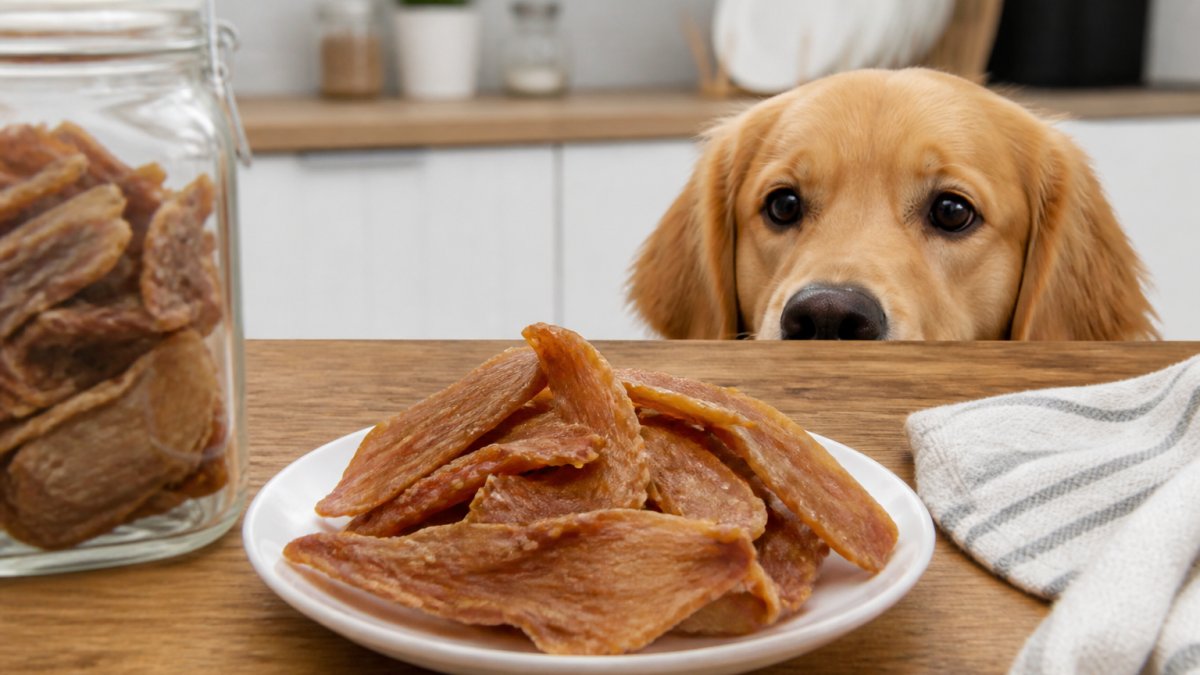
A single-ingredient treat does one thing and does it plainly. It is meat, sliced and dried, with nothing added. That simplicity is the whole point.
At Five Local Dogs, our treats are exactly that: one ingredient, hand-sliced, and made in small batches. No preservatives, no coatings, nothing to decode. For owners of picky dogs or dogs with sensitive stomachs, a short list is easier to trust because there is less that can go wrong.
Here is why this matters for sensitive dogs. The more ingredients in a treat, the harder it is to figure out what caused a reaction. When a treat has one ingredient, you remove most of the guesswork. That is a real advantage for a dog with allergies or a touchy gut.
Single-ingredient treats also tend to taste clean. Picky dogs often reject treats loaded with fillers and artificial flavoring. A plain, well-made protein treat gives them something honest to say yes to.
Dog Treat Safety and Freshness: Storage, Spoilage, and Serving Size
Dog treat safety comes down to four things: how you store the bag, how you spot spoilage, how much you feed, and what you do when something goes wrong. Get these right and you avoid most problems.
Storage. Keep treats in a cool, dry place in a sealed container. Heat and moisture speed up spoilage. If the bag reseals, use it. If it does not, move the treats to an airtight container. The pantry shelf above the stove is one of the worst spots in the house, the repeated heat cycles push fats toward rancidity faster than a steady room temperature would.
Spoilage. Watch for changes in smell, color, or texture. A fresh treat smells like its ingredient. A spoiled one smells off, looks dull, or feels slimy. Rancidity is the most common failure in meat-based treats: the fats oxidize, and the treat develops a sharp, paint-like or crayon-like odor. Mold shows up as fuzzy patches, usually white, green, or black, and it can appear on treats that look dry on the outside. Damaged packaging, a torn seal, a puffy bag, or a vacuum pack that has lost its vacuum, is a warning sign on its own, because it means air or moisture got in. When in doubt, throw it out. A spoiled treat is not worth the risk.
Serving size. Treats should be a small part of your dog's daily calories, not a meal. A common mistake is feeding treats on top of full meals and calling it a snack. Those calories add up. For a small dog, a couple of treats can be a meaningful share of the day. Break larger biscuits into pieces, use a portion of the regular kibble as a training reward, and keep the treat budget in mind every time you reach for the bag.
When something goes wrong. If you suspect a treat made your dog sick, stop feeding it and set the bag aside, do not throw it away yet. Note the brand, the lot code, and the date, because that information is what a recall investigation needs. You can check for active recalls through the FDA's pet food recall notices and report an adverse reaction through the FDA Safety Reporting Portal. The ASPCA Animal Poison Control Center is also a good resource when you are unsure whether something your dog ate is safe. A quick habit: before you buy a new brand, search its name plus "recall." It takes ten seconds and can save you a lot of worry.
Watch Out Never feed a treat that has changed color, smells sour or paint-like, feels sticky, or shows any fuzzy growth. Spoiled food can cause vomiting and diarrhea, and the cleanup costs far more than the bag was worth. If a treat looks or smells wrong, toss it, and if your dog already ate it, watch for vomiting, diarrhea, or lethargy and call your veterinarian if symptoms appear.
When Your Dog Reacts: Allergens, Digestive Upset, and Recalls
A reaction after a treat is a signal worth taking seriously. Common signs include itching, vomiting, diarrhea, digestive upset, and skin irritation. Some dogs also show coat changes when a food does not agree with them.
If your dog reacts, stop the treat and note what was in it. A single-ingredient treat makes this step simple, because there is only one thing to suspect. A treat with ten ingredients leaves you guessing.
Recalls are the other safety net. Treats get pulled from shelves for contamination and other product safety issues. You can check for recalls through the FDA's pet food recall notices and report a problem through the FDA Safety Reporting Portal. The ASPCA Animal Poison Control Center is also a good resource when you are unsure whether something your dog ate is safe.
A quick habit: before you buy a new brand, search its name plus "recall." It takes ten seconds and can save you a lot of worry.
Frequently Asked Questions
What are the most common signs of low quality dog treats?
The clearest signs of low quality dog treats include vague ingredient names like meat by-products or animal digest, cheap fillers such as corn, wheat, and soy, hidden sugars like molasses and dextrose, and artificial colors, flavors, or preservatives. Physical clues matter too: treats that are greasy, crumble into dust, smell rancid, or carry a strong chemical odor are worth skipping. If the label lists more unrecognizable additives than real food, that's a low quality dog treat.
How do I read a dog treat label to spot low-quality ingredients?
Start with the ingredient list, which is ordered by weight. The first two or three ingredients should be a named animal protein, such as chicken or beef, not a grain or filler. Watch for splitting, where one ingredient appears under several names to push it lower on the list. Check the guaranteed analysis for protein and fat percentages, and note the calorie content per treat. A short, recognizable list is the easiest way to judge quality quickly.
Are single-ingredient dog treats safer for dogs with allergies or sensitive stomachs?
Single-ingredient dog treats can be a smart choice for dogs with food sensitivities because there are fewer ingredients to trigger a reaction. When a treat contains only one item, such as dehydrated chicken, you know exactly what your dog is eating and can rule out allergens more easily. If your dog has a diagnosed allergy, confirm the protein is safe for them and introduce any new treat slowly, one small piece at a time.
How should I store dog treats to keep them fresh and safe?
Keep treats in an airtight container away from heat, moisture, and direct sunlight, which speed up spoilage and rancidity. Check the package for storage instructions, since some treats need refrigeration after opening. Watch for physical signs of spoilage, including a rancid or sour smell, visible mold, discoloration, or a texture change. If a treat looks or smells off, throw it out rather than risk digestive upset, and always check for recalls before feeding a new bag.
Choosing treats your dog can actually thrive on comes down to reading the label, trusting the numbers, and keeping the ingredient list short. Five Local Dogs makes that easy with single-ingredient dehydrated chicken treats, hand-sliced and made in small batches with no preservatives or coatings. Every batch is sourced from farms in the U.S., so you know exactly what is in the bag. Get started with Five Local Dogs and feed your dog something you can feel good about.
SHOP

Comments