
How Do You Manage Dog Weight With Healthy Snack Portions?

Last Updated: October 25, 2026
Quick Summary
Manage dog weight with healthy snack portions by reserving about one-tenth of your dog's daily calorie allowance for treats and measuring every snack against that budget. Weigh each treat, slice it thin, and log every hand-out so snacks come out of the daily total rather than on top of it.
Ask your vet to set a target weight and a safe rate of loss before sizing any snacks.
Reserve roughly one-tenth of the daily calorie target for treats, feeding the rest as measured meals.
A 40 lb dog on a 700-calorie plan gets about a 70-calorie daily snack budget.
The 90/10 rule keeps about 90% of calories from meals and 10% from treats.
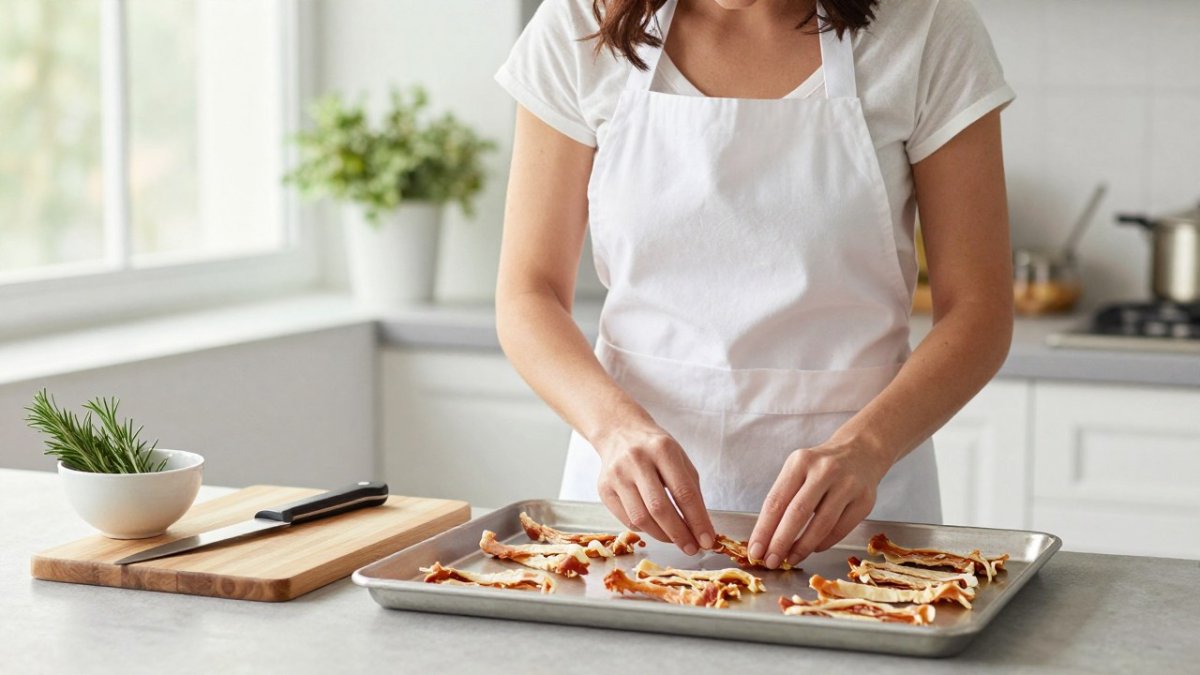
Slice treats thin and weigh them, since a thick slice can carry two to three times the calories.
Table of Contents
Why Snack Portions Decide Whether Your Dog Loses Weight
Step 1: Set a Safe Weight-Loss Target With Your Vet
Step 2: Build a Daily Calorie Allowance for Meals and Snacks
Worked example: a 40 lb dog on a weight-loss plan
Scaling the budget to different dog sizes
Step 3: Use a Dog Treat Calorie Calculator to Size Every Snack
Step 4: Apply the 90/10 Rule for Dog Treats
Step 5: Swap in Low-Calorie Dog Treats and Safe Fruits and Vegetables
Step 6: Follow a Dog Weight-Loss Feeding Plan Without Overfeeding
Snack Portions by Dog Weight: A Practical Reference
How size and preparation change the count
Preparation and safety notes
Adapt Snack Portions for Medical Conditions and Life Stages
Track Treats and Progress, Then Pick Up Single-Ingredient Treats
Frequently Asked Questions
Why Snack Portions Decide Whether Your Dog Loses Weight
Most dog weight plans fail at the treat jar, not the food bowl. A healthy weight for your dog depends on calorie balance, and snacks are the quiet half of that equation. At Five Local Dogs, we hear from owners who swear their dog "barely eats" yet keeps gaining. The treats tell the real story.
Healthy snack portions are measured amounts of low-calorie food that fit inside your dog's daily calorie allowance without pushing it over. Get the portions right and weight loss becomes possible. Get them wrong and even "healthy" treats add up fast.
Here's the core idea: treats are not extra. They are part of the daily food intake. Every bite-sized treat steals calories from the meal portion.
A handful here, a table scrap there, and the daily calorie allowance is gone
Large biscuits can rival a small meal in calories
Owners often undercount treats because they are not weighed or logged
That's why we treat snack sizing as the first skill to learn, not an afterthought.
Step 1: Set a Safe Weight-Loss Target With Your Vet
Start with a number, not a guess. Ask your vet to set a target weight and a safe rate of loss for your dog. This gives you a goal to measure snack portions against.
A common approach is slow, steady loss rather than crash dieting. Your vet can confirm what's safe for your dog's size, age, and health.
Bring these to the appointment:
Your dog's current weight
A rough log of daily food and treats
Any health conditions or medications
Watch out: Cutting food sharply on your own can shortchange nutrition. Let veterinary guidance from the American Veterinary Medical Association shape the plan, especially if your dog has other health issues.
Once you have a target, every snack decision has a reference point.
Step 2: Build a Daily Calorie Allowance for Meals and Snacks
Your dog's daily calorie allowance is the total energy budget for food and treats combined. Split it before the day starts, and the guesswork disappears. Most weight plans fail here because the split stays abstract, "a little less food, a few less treats", instead of becoming a number you can spend down.
A simple method:
Ask your vet for a daily calorie target for your dog's current weight and goal weight
Reserve a set share for treats, often around one-tenth of the total
Feed the rest as measured meals
Stick to the split every day, and recheck it at each weigh-in
This is where calorie balance becomes real. The treat share is your snack budget. Spend it, and no more.
Worked example: a 40 lb dog on a weight-loss plan
Say your vet sets a daily target of about 700 calories for a moderately active 40 lb dog working toward a leaner weight. Reserve one-tenth for snacks:
Daily total: 700 calories
Snack budget (10%): 70 calories
Meal budget (90%): 630 calories, split across two meals of about 315 calories each
Now the treat jar has a ceiling. A 70-calorie snack budget might be three thin slices of a single-ingredient treat at roughly 20 calories each, or a small handful of green beans plus one slice. The exact figures depend on the label, but the structure is what matters: the snacks come out of the 700, not on top of it.
Scaling the budget to different dog sizes
The same one-tenth split works at any size, only the numbers move. These are illustrative starting points, not prescriptions; your vet's target replaces them.
Dog size | Illustrative daily target | Snack budget (about 10%) |
Small (under 20 lb) | 400 calories | about 40 calories |
Medium (20-50 lb) | 700 calories | about 70 calories |
Large (50-90 lb) | 1,100 calories | about 110 calories |
Giant (over 90 lb) | 1,500 calories | about 150 calories |
On a tight weight-loss plan, your vet may set the treat share lower than one-tenth, sometimes closer to 5%. Ask, and write the number down.
Pro Tip Put the snack budget where you'll see it. A note on the fridge, "Snacks: 70 cal/day", turns an abstract rule into a daily limit the whole household can check.
Many owners find a written split helps. Write "meals" and "treats" on the bag or a note on the fridge. It keeps the feeding routine honest, and it makes the next section's portion math possible.
Step 3: Use a Dog Treat Calorie Calculator to Size Every Snack
A dog treat calorie calculator turns "a few treats" into actual numbers. Use a kitchen scale and the treat's calorie information to size each snack before it reaches the bowl.
Here's how we'd do it:
Weigh the treat in grams on a small scale
Check the calories per gram or per ounce on the label
Do the math to see how much of the treat budget it uses
Adjust the portion to fit

Most single-ingredient treats are simple to measure because there is one ingredient and a clear calorie figure. That transparency is a big reason we keep our treats to one ingredient.
Step 4: Apply the 90/10 Rule for Dog Treats
The 90/10 rule for dog treats is a simple split: about 90% of daily calories from complete meals, about 10% from treats (Creating A Nutritional Plan). It keeps nutritional balance intact while still letting you reward your dog.
Why it works:
Meals carry the vitamins and minerals your dog needs
Treats stay a small, controlled slice of the day
The math is easy to remember and easy to check
If treats creep past that share, meals get shortchanged. That's when coats dull and energy dips.
Watch out: The 10% is a ceiling, not a target. On a tight weight-loss plan, your vet may set it lower.
Step 5: Swap in Low-Calorie Dog Treats and Safe Fruits and Vegetables
Low-calorie dog treats let you reward more often for fewer calories. The trick is choosing snacks with real nutrition and no filler.
Great swaps include:
Green beans: low-calorie vegetables that add crunch and fiber
Carrots: cheap, crunchy, and easy to portion
Safe fruits like banana slices in small amounts
Single-ingredient dehydrated treats sliced thin
Safe fruits and low-calorie vegetables help with satiety, so your dog feels full on fewer calories. You can also shop beet treats as a fiber-rich vegetable swap. Fiber does a lot of the work here.
Want to judge a treat's quality before you buy? Our guide on how to identify high quality dog treat ingredients walks through what to look for on the label.
Prep matters too. Cut treats into bite-sized pieces, wash produce, and skip anything seasoned or sugary.
Step 6: Follow a Dog Weight-Loss Feeding Plan Without Overfeeding
A dog weight-loss feeding plan works when meals and snacks are measured, scheduled, and consistent. Overfeeding usually hides in the extras, not the bowl.
Build the plan around:
Measured meal portions at set times
A fixed treat budget for the day
A regular feeding routine so nobody doubles up
A food puzzle or treat ball to slow eating and stretch a small snack
Slow eating helps your dog feel full and makes a tiny portion last. A treat ball with a few pieces of regular kibble can replace a pile of biscuits.
The biggest risk is the whole household feeding treats. One person's "just one" adds up across the day. Agree on the budget and who hands out snacks.
Snack Portions by Dog Weight: A Practical Reference
Use this as a starting point, then adjust with your vet. Portions are small on purpose, and every figure below is an estimate to be checked against the actual label, treat calories vary widely by brand and preparation.
Dog size | Approx. weight | Illustrative snack budget | Example snack portion |
Small | Under 20 lb | about 40 calories/day | 2 thin slices of a single-ingredient treat (about 20 cal each), or 4-5 green bean pieces |
Medium | 20-50 lb | about 70 calories/day | 3 thin slices, or a small handful of carrot rounds |
Large | 50-90 lb | about 110 calories/day | 5 thin slices, or a modest handful of green beans plus one slice |
Giant | Over 90 lb | about 150 calories/day | 6-7 thin slices, weighed to fit the budget |
These are ranges, not rules. Weigh treats and match them to your dog's actual calorie allowance.
How size and preparation change the count
The same snack can swing widely depending on how it's cut and cooked:
Thickness matters most. A thick slice of a dehydrated treat can carry two to three times the calories of a thin one. Slice thin, then weigh.
Water content changes density. Fresh green beans and carrots are mostly water, so a handful costs few calories. Dried or dehydrated versions concentrate the same food into far less weight, and far more calories per piece.
Cooking method adds calories. Plain steamed or raw vegetables are the low end. Anything roasted in oil, breaded, or seasoned climbs quickly and may not be safe for dogs.
Frequency multiplies. One 20-calorie slice three times a day is 60 calories, most of a small dog's entire snack budget. Count every hand-out, not just the big ones.
Preparation and safety notes
Wash all produce and cut it into bite-sized pieces to reduce choking risk
Skip anything seasoned, sugary, or cooked in oil or butter
Avoid grapes, raisins, onions, garlic, and chocolate, these are unsafe for dogs regardless of portion
Introduce any new snack slowly and watch for stomach upset
For chews and harder treats, match the size to your dog's mouth and supervise
Watch Out A "healthy" label does not mean low-calorie. Check the calories per treat on the package, and if the label lists calories per ounce, weigh the portion before you do the math.
When in doubt, start smaller than the table suggests and adjust at the next weigh-in. A portion that fits the budget beats a portion that looks generous.
Adapt Snack Portions for Medical Conditions and Life Stages
Not every dog fits the standard plan. Medical conditions and life stages change how you size snacks.
Adjust for:
Puppies: growing dogs need more calories, so treat share scales up
Seniors: lower calorie needs, so smaller snack portions
Diabetes or weight-related conditions: your vet sets stricter limits
Food allergies or sensitive stomachs: stick to limited-ingredient treats
If your dog has a diagnosed allergy, single-ingredient treats make it easier to avoid triggers. Fewer ingredients mean fewer unknowns.
For dogs with sensitive stomachs, introduce any new snack slowly and watch for changes. When in doubt, ask your vet before swapping foods.
Track Treats and Progress, Then Pick Up Single-Ingredient Treats
What gets tracked gets managed. A simple log of treats and weekly weigh-ins shows whether your healthy snack portions are working.
Track these:
Daily treat count and size
Weekly weight
Any changes in energy or appetite
If weight stalls, check the treat log first. Small portions add up quietly, and the log catches it.
When you're ready to stock up, choose treats you can measure and trust. And if you want to source locally made options, our guide on where to buy locally made dog treats covers your choices.
Frequently Asked Questions
What is the 90/10 rule for dog treats?
The 90/10 rule caps treats at 10 percent of your dog's daily calories, with the other 90 percent coming from a complete balanced food. For a dog on 700 calories a day, that means 70 calories of treats, roughly a few small pieces of dehydrated chicken or a handful of green beans. Weigh or count treats so the 10 percent stays honest, and subtract those calories from the meal portion rather than adding them on top.
How do I calculate a healthy treat portion for my dog?
Start with your dog's daily calorie allowance, then take 10 percent of it for treats. Divide that treat budget by the calories in one piece to get a daily count. A dog treat calorie calculator speeds this up: enter weight, life stage, and treat type. Keep each piece bite-sized, about the size of a pea for small dogs, and split larger pieces so one treat becomes three or four rewards without changing the total.
Should I reduce my dog's meals to account for treats?
Yes, if you want weight loss to continue. Treats count toward daily calorie intake, so a dog getting 100 calories of snacks needs 100 fewer calories at mealtime, or the calorie balance tips toward weight gain. Measure the meal portion with a scale rather than a scoop, subtract the treat calories, and keep the total steady. Ask your vet before cutting meals sharply, especially for small breeds.
How often should I weigh my dog during a weight-management plan?
Weigh your dog every two weeks on the same scale, and log the number. A safe rate is about 1 to 2 percent of body weight per week for most dogs, so a 50-pound dog losing roughly 0.5 to 1 pound weekly is on track. If the number stalls for three or four weeks, recheck treat portions and meal measurements before changing the plan. Bring the log to vet visits so adjustments are based on data.
Managing dog weight takes patience, measured snacks, and a plan you can stick to. Five Local Dogs makes the treat half simpler with single-ingredient dehydrated chicken treats, hand-sliced in small batches, with no preservatives or artificial coatings and chicken sourced from U.S. farms. Every bag is consistent and easy to portion, so you can reward your dog without wrecking the calorie budget. Get started with Five Local Dogs and feed wholesome snacks that fit your dog's weight plan.
SHOP
Add fivelocaldogs.com as a preferred source on Google →

Comments