
Batch Testing for Dog Treats: A Practical Safety Guide

Last Updated: November 19, 2026
Quick Summary
Batch testing is the practice of pulling representative samples from a single production run and sending them to a lab to confirm what is actually in the food. It matters because a label is a promise, and only a lab result proves you kept it, catching problems before your dog does.
A batch is everything made in one run; a lot number ties that run to its results.
Proximate analysis measures protein, crude fat, moisture, ash, and fiber on every batch.
Salmonella is the pathogen that matters most for meat-based treats and dehydrated animal products.
Print guaranteed minimums and maximums on labels, not the exact lab numbers.
Quarantine a failed batch immediately, then retest before concluding the failure is real.
Wondering how your dog's treats are tested?
Five Local Dogs makes small-batch, single-ingredient treats with no preservatives or coatings.
Table of Contents
Why Batch Testing Decides Whether a Dog Treat Is Safe
Batch testing is the practice of pulling samples from a single production run and sending them to a lab to confirm what is actually in the food. The importance of batch testing for dog treats comes down to one fact: a label is a promise, and only a lab result proves you kept it.
Here is the uncomfortable part most guides skip. A recipe can be perfect and a batch can still fail. Meat varies. Ovens run hot in one corner. A supplier ships a lot with more moisture than the last one. None of that shows up by looking at the treat.
Testing catches it before your dog does.
Keep reading, and we will walk through what to test, how to sample, and what to do when a result comes back bad. That last part is where most small producers freeze up.
What Batch Testing Means in Dog Treat Testing Programs
Batch testing is the process of collecting representative samples from one production run, submitting them to a laboratory, and comparing the results against your specification and your label.
A batch is everything made in one run under the same conditions. A lot number is the tag that ties that run to its test results, its ingredients, and its shipping records.
A solid dog treat testing program rests on three habits:
Testing every batch, not just the first one
Keeping samples and results tied to a lot number
Acting on a failure instead of shipping anyway
The treat itself does not change. What changes is whether you can prove what you sold.
The Tests That Matter: Protein, Fat, Moisture, Ash, and Pathogens
Two families of tests cover almost everything a dog treat producer needs: nutritional testing and microbiological testing. One proves the label is honest. The other proves the food is safe.
Nutritional Analysis and Proximate Testing
Proximate analysis breaks a treat into its core parts. It measures protein, crude fat, moisture, ash, and fiber, and from those you can estimate calorie content.
This is the backbone of any nutritional analysis. It tells you whether your dehydrated chicken really hits the protein level you print, and whether moisture drifted between batches. High moisture shortens shelf life and invites spoilage.
Run it on every batch. It is your early warning system.
Microbiological Testing and Salmonella Control
Pathogen testing looks for organisms that make dogs and people sick. Salmonella is the one that matters most for meat-based treats, and it is the reason raw and dehydrated animal products get extra scrutiny.
A standard microbiological panel checks for Salmonella and often other organisms like Listeria and E. coli. Dehydrated meat is not cooked to sterile, so contamination is a real risk, not a theoretical one.
Cross-contamination is the sneaky one. A clean batch handled on a dirty surface becomes a contaminated batch.
How to Get a Guaranteed Analysis for Dog Treats
A guaranteed analysis is the panel on a pet food label listing minimum protein and fat and maximum fiber and moisture. Getting one starts with a lab, not a label printer.
Here is the short version of how to get a guaranteed analysis for dog treats:
Pick an accredited lab that handles pet food.
Send a representative sample from a finished batch.
Request proximate analysis plus any pathogens you need.
Take the lab's numbers and set your guaranteed minimums and maximums.
Print them on the label and file the report by lot number.
The key move is step four. You do not print the exact lab number. You print a guaranteed floor or ceiling you can reliably meet, batch after batch. That buffer is what keeps you compliant when a run drifts.
Pet Treat Guaranteed Analysis Testing and Label Accuracy
Label accuracy is where pet treat Guaranteed Analysis testing earns its keep. The number on the bag and the number in the lab report have to agree, or you have a compliance problem and a trust problem.
Three things drive label inaccuracy:
Printing lab results instead of guaranteed minimums
Skipping testing and copying a competitor's panel
Changing a recipe or supplier without retesting
That third one catches small producers constantly. A new chicken supplier can shift fat and moisture enough to break your label. Retest after any change.
If you want to read a guaranteed analysis the way a label reviewer does, our guide on how to read dog treat labels breaks down each line.
Choosing a Representative Sample and Setting Testing Frequency
A representative sample is a small portion pulled so that it truly reflects the whole batch. Grab one treat off the top and you have sampled a treat, not a batch. This is the step where most small producers quietly undermine an otherwise sound testing program, because a bad sample makes a good lab result meaningless.
Building a sample that actually represents the run
Sampling has to be planned before production starts, not improvised at the packing table. A workable approach for small-batch treat production looks like this:
Stratify across the run. Divide the production run into thirds, start, middle, and end, and pull pieces from each. Early pieces and late pieces can differ in moisture and fat as equipment heats up or ingredients settle.
Sample across the batch, not the top of the batch. If treats cool on racks or rest in bins, pull from multiple positions: top, middle, bottom, and the corners of the container where fines and crumbs collect.
Composite versus discrete samples. A composite sample combines several pulls into one submission and gives you an average. Discrete samples are kept separate so you can see whether one corner of the run drifted. Composite is cheaper; discrete tells you more. Many producers run composite for routine nutritional checks and discrete when investigating a problem.
Match sample size to the lab's minimum. Labs publish a required mass per test, and shorting it forces a rejection or a retest. Weigh the sample; do not eyeball it.
Handle it like food. Use clean gloves and clean tools, seal in the lab's supplied bag or a food-safe container, and label with the lot number, date, time, and production line before it leaves the room.
Watch out: pulling the sample after the batch has been blended, bagged, and stacked means you are sampling the packaging, not the production run. Pull during or immediately after production, before the batch disperses.
How many samples per batch
There is no single correct number, but the logic is consistent: the more variable the process and the higher the risk, the more pulls you need. A homogeneous, single-ingredient, dry product needs fewer pulls than a mixed-ingredient treat with a wet component. A new recipe or a new oven needs more pulls than a process that has run unchanged for a year. The point of multiple pulls is to catch within-batch variation, which a single grab sample cannot reveal.
Setting testing frequency by risk
Frequency should be a written schedule tied to risk, not a habit. A common pattern among small producers:
New recipe, new supplier, or new process: test every batch until at least several consecutive runs come back in spec and stable. Only then consider reducing.
Established runs with a clean history: move to a set cadence, for example, a nutritional check on a fixed interval and pathogen testing on a routine schedule regardless of history.
After any change: reset to every-batch testing. A new chicken supplier, a new dehydrator, or a reformulation can shift fat and moisture enough to break a label guarantee, and the change is invisible until you test.
Pathogens: do not let a clean history justify dropping pathogen testing. Salmonella risk is driven by ingredient lots and cross-contamination events, not by how long your process has behaved.
The trade-off is real. More testing costs more and takes longer, and every test is a line item against a small producer's margin. Fewer tests save money and raise the chance that a bad batch ships. For meat-based treats, pathogen testing is the last place to economize, because it is the test most directly tied to animal and human health.
If you want the full loop from sampling through release, the workflow section below walks it step by step.
A Step-by-Step Batch-Testing Workflow
Here is the workflow we would run for any small-batch treat operation.
Step 1: Assign the lot number before you start. Every batch gets a unique number the moment production begins. It follows the batch through sampling, testing, and shipping.
Step 2: Pull samples during production. Collect pieces across the run into clean, labeled sample bags. Note the time and the production line.
Step 3: Store a retention sample. Keep one sealed sample from each batch on hand. If a customer question comes in months later, you have the actual product to check.
Step 4: Ship to the lab with a clear request. State which tests you need and the lot number on the submission form.
Step 5: Log the results against the lot. File the report where you can find it fast.
Step 6: Compare to spec and decide. Pass, hold, or fail. Then release or quarantine.

That is the whole loop. Simple, repeatable, and boring in the best way.
Here is the workflow we would run for any small-batch treat operation.
Step | What to do |
Step 1 | Assign the lot number before production begins |
Step 2 | Pull samples during production into clean, labeled bags |
Step 3 | Store a sealed retention sample from each batch |
Step 4 | Ship to the lab with tests and lot number stated |
Step 5 | Log the results against the lot |
Step 6 | Compare to spec and decide pass, hold, or fail |
Batch Variability, Traceability, and Shelf-Life Testing
Batch variability is the natural drift between production runs. No two batches are identical, and pretending otherwise is how labels slip.
Traceability is the paper trail that connects a finished bag to its batch, its test results, and its ingredients. A lot number is the thread. Pull it and you can trace a bag back to the source.
Producers focused on sourcing should know how to verify where meat actually came from. Our guide on how to verify US-sourced dog treats covers the documentation to ask for. And if you are planning storage around a test schedule, our piece on the shelf life of small batch treats has the practical side.
What to Do When a Batch Fails
A failed batch is not a crisis. Shipping it is. The response should be a decision tree, not a panic, and the first branch depends on what failed.
First, classify the failure
Not all failures carry the same weight, and treating them identically wastes effort or, worse, under-reacts to a serious one.
Nutritional miss (protein, fat, moisture, ash, fiber out of spec): usually a quality and label-accuracy problem. The batch may be reworkable or releasable under a corrected label, but it must not ship against a guarantee it cannot meet.
Pathogen positive (Salmonella, Listeria, E. coli): a safety problem. The batch does not ship. This is the branch where the decision is made for you.
Shelf-life or stability failure: a quality problem that may not surface until months after release, which is why retention samples matter.
The response sequence
Step 1: Quarantine immediately. Pull the batch from inventory, physically segregate it, and mark it held. Do this before you investigate, not after. A batch that sits in shippable inventory while you think is a batch that can ship by accident.
Step 2: Confirm the failure is real. Retest a fresh sample drawn from the retained portion of the same lot. Labs make errors, samples get contaminated in handling, and a single out-of-spec result is not proof. A retest either confirms the failure or reveals a sampling or lab problem.
Step 3: Investigate root cause. Work backward through the batch record: the ingredient lots used, the process parameters (temperatures, times, line), the sampling method, and the handling between production and testing. For a pathogen hit, cross-contamination is the usual suspect, a clean batch handled on a dirty surface becomes a contaminated batch. For a nutritional miss, check whether an ingredient supplier changed and whether the recipe was followed.
Step 4: Decide, hold, rework, or discard. A nutritional miss may be reworkable into a product with a corrected guarantee, or releasable only under a label that matches the actual numbers. A pathogen positive is discarded or destroyed; it is not reworked into food. When in doubt, the conservative choice is the one that keeps the product out of the market.
Step 5: Decide whether a recall is warranted. If the failed batch already shipped, the question shifts from hold to recall. A pathogen-positive lot that reached customers is a recall situation, and the lot number is what makes a targeted recall possible instead of a blanket one. This is the payoff for assigning lot numbers before production starts.
Step 6: Document the corrective action. A failure record should capture the lot number, the test and result, the retest, the root cause, the disposition, and the corrective action taken. That record is your defense if a customer question or a regulator's inquiry arrives months later, and it is what turns a failure into a process fix rather than a repeat.
Watch out: the most common mistake is blaming the lab first. Usually the sample or the process is the problem, not the test, but "usually" is not "always," which is why the retest comes before the root-cause conclusion, not after it.
What a failure should change
A failure that does not change the process will recur. The corrective action is the part that matters: tighten the sampling plan, add a supplier check, adjust a process parameter, or raise testing frequency on that product line until results stabilize. A failure handled well is the cheapest quality lesson a producer gets.
If a batch fails on quality signals, our guide on the signs of low quality dog treats shows what those warning signs look like on a label.
Buying Treats With Confidence From Five Local Dogs
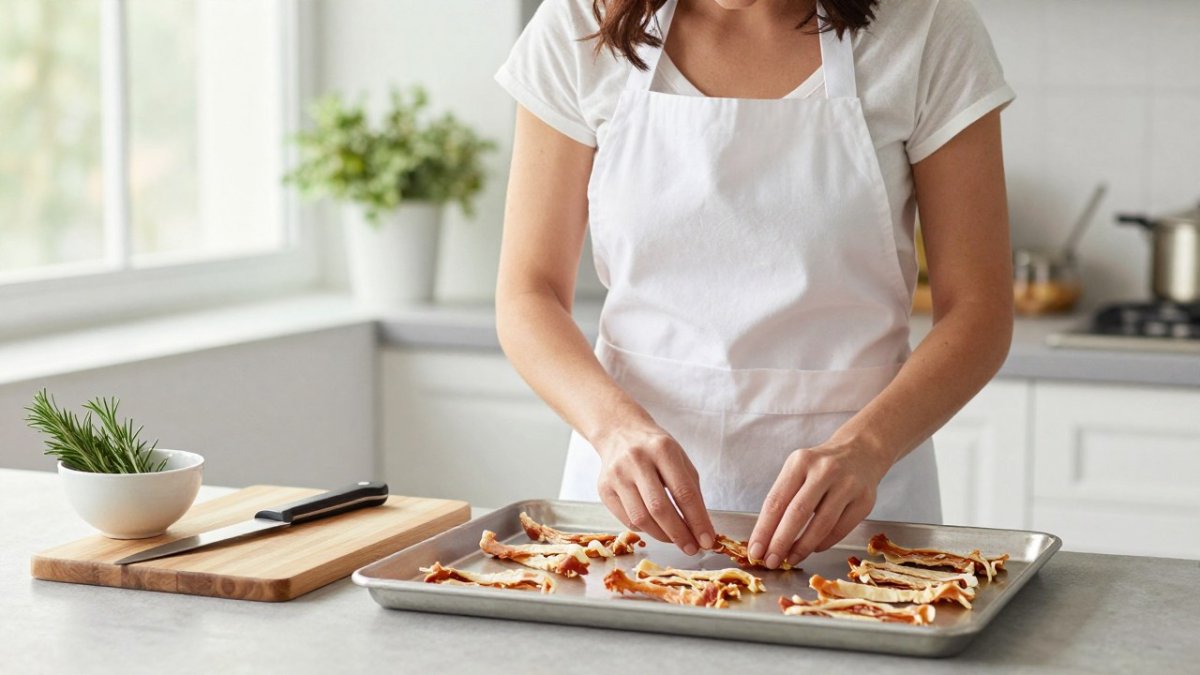
You should not have to take a producer's word for it. At Five Local Dogs, we make our single-ingredient treats in small batches, by hand, with no preservatives or coatings. Every batch stays simple on purpose: one ingredient, sourced from farms in the U.S., and hand-sliced.
If your dog turns their nose up at everything, our Magic Pixie Powders are made from our single-ingredient treats and are great for picky eaters. Curious how we handle freshness and storage? Our full product lineup shows what is available right now.
Batch testing is not glamorous, and it is not optional if you want to know what is in the bag. We would rather test and know than guess and hope. Start with a representative sample, test every batch, and never ship a failure. That is how trust gets built, one lot number at a time. Get started with Five Local Dogs and feed a treat you can actually trace.
Frequently Asked Questions
What is batch testing for dog treats?
Batch testing means pulling samples from a single production run and sending them to a laboratory for analysis. The lab tests for nutrient content (protein, fat, moisture, ash, fiber), pathogens such as Salmonella, and sometimes shelf-life stability. Results are tied to a lot number so a producer can trace exactly which run a bag came from. Batch testing is the backbone of quality assurance for any treat maker, large or small, because it turns claims on a label into verified numbers.
How often should dog treat batches be tested?
Frequency depends on risk and volume. A common approach is to test every new formulation before launch, then test each production run for pathogen risk, with full nutritional panels run periodically or whenever ingredients or suppliers change. Small producers making single-ingredient treats may test each lot for pathogens and rotate full nutritional analysis across a set number of batches. The key is a written schedule tied to lot numbers, not ad hoc testing when something feels off.
Do dog treats need FDA approval?
No. The FDA does not approve pet treats or pet food before sale. Instead, treats must be safe, produced under sanitary conditions, and labeled truthfully under the Federal Food, Drug, and Cosmetic Act. The FDA can inspect facilities and take action against unsafe or misbranded products. That is exactly why batch testing matters: without a pre-market approval step, the producer's own quality control program is the main safeguard standing between a bad batch and a customer's dog.
What does a guaranteed analysis tell you about dog treats?
A Guaranteed Analysis lists minimum or maximum percentages for crude protein, crude fat, crude fiber, and moisture, and sometimes ash. It is a legal label requirement, not a full nutritional breakdown. Batch testing is how a producer confirms the numbers on the label match what is actually in the bag. If a lab result falls outside the guaranteed range, the label is inaccurate and the product may be misbranded, which is why pet treat Guaranteed Analysis testing belongs in every routine testing panel.
Comments