
Can Puppies Eat Dehydrated Sweet Potatoes: A Safe Feeding Guide

Last Updated: November 21, 2026
Quick Summary
Yes, puppies can eat dehydrated sweet potatoes if the slices are plain, fully cooked, cut small, and served in moderation. Always cook or blanch the sweet potato before drying it, since raw slices are too starchy and tough for a puppy's stomach.
Start puppies 8 to 12 weeks old with a pea-sized piece up to 2 to 3 times per week.
Slice sweet potatoes 1/8 to 1/4 inch thick so they dry faster and are safer for small mouths.
A finished slice should be firm and snap when bent, with no soft center.
Stay within arm's reach while your puppy chews, since most choking incidents happen when puppies are left alone.
Store dehydrated sweet potatoes in an airtight container in a cool, dry place.
Not sure which treat suits your puppy?
Five Local Dogs makes hand-sliced, single-ingredient dehydrated chicken treats in small batches.
Table of Contents
Can Puppies Eat Dehydrated Sweet Potatoes?
Yes, puppies can eat dehydrated sweet potatoes, as long as the slices are plain, fully cooked, cut small, and served in moderation. This is one of the safer chews you can hand a young dog when it is prepared plainly.
The longer answer matters more. A dehydrated sweet potato is not the same as a raw one, and a puppy's stomach is not the same as an adult dog's. Below, we walk through exactly how to prepare, portion, and store these treats so your puppy gets the benefit without the upset.
Are Dehydrated Sweet Potatoes Safe for Puppies?
Dehydrated sweet potatoes are safe for puppies when they are made from plain, unseasoned sweet potato and dried fully. The drying process removes water, which concentrates the natural sugars and fiber. That makes the treat chewier and richer than a fresh cube.
Safety comes down to three things: what went into the dehydrator, how dry the slice is, and how big the piece you hand over.
Cooked, Raw, or Dried: What the Difference Means for a Puppy
Cooked sweet potato is soft and easy to digest. Raw sweet potato is hard, starchy, and difficult for a puppy's gut to break down. Dried sits in between: it starts cooked or blanched, then loses moisture slowly.
Raw: skip it. Hard texture and tough starches.
Cooked: good in small mashed amounts.
Dehydrated: good as a chew, if fully dried and plain.
The drying step does not cook the potato. If you slice a raw sweet potato and dry it, you get a tough, starchy chew that is harder on a puppy's stomach. Start with cooked or blanched slices instead.
The Safety Checklist for Puppy Nutrition
Run through this list before any new treat, not just sweet potato:
The treat is plain, with no salt, sugar, oil, or seasoning
The sweet potato was cooked or blanched before drying
The slice is fully dry, not leathery or damp in the middle
The piece is small enough for your puppy's mouth
You are introducing it alone, not mixed with other new foods
Fresh water is available
You are watching your puppy while they chew
Nutritional Benefits of Sweet Potatoes for Growing Puppies
Sweet potatoes contain dietary fiber, plus vitamins and minerals that growing dogs need.
One thing to keep straight: sweet potato is a treat, not a meal. It adds nutrients, but it does not replace a complete puppy food. Think of it as a healthy treat that happens to do some good.
If you are using sweet potato as a training reward, small pieces work well. Our guide on using safe human foods as dog training treats covers how to fit them into a reward schedule without overfeeding.
How Much Sweet Potato Can a Puppy Eat?
Puppies are not small adult dogs, and portioning a dehydrated sweet potato treat is not a one-size rule. A toy-breed puppy at eight weeks and a large-breed puppy at eight weeks have very different mouths, guts, and calorie needs. The right amount depends on age, expected adult weight, and how the treat fits into the day's complete puppy food.
Start with a very small piece and hold at that amount for several days before nudging up. The goal is a taste and a chew, not a meal replacement.
Portion Sizes by Puppy Age and Expected Adult Weight
Use expected adult weight, not current weight, because a large-breed puppy may weigh less than a small-breed adult at the same age. Adjust down if your puppy is a picky eater or has a sensitive stomach.
Puppy Age | Expected Adult Weight | Starting Amount per Treat | Max Frequency | Texture Target |
8-12 weeks | Under 25 lb | Pea-sized piece, softened slightly | 2 times per week | Soft-chewy, bends easily |
8-12 weeks | 25-50 lb | Pea- to thumbnail-sized piece | 2-3 times per week | Soft-chewy |
8-12 weeks | 50 lb+ | Thumbnail-sized piece | 3 times per week | Chewy, not rock-hard |
3-6 months | Under 25 lb | Two pea-sized pieces | 3 times per week | Chewy |
3-6 months | 25-50 lb | One thumbnail piece | 3-4 times per week | Chewy |
3-6 months | 50 lb+ | One small slice, cut in half | 4 times per week | Chewy |
6-12 months | Under 25 lb | One thumbnail piece | 4 times per week | Chewy |
6-12 months | 25-50 lb | Two thumbnail pieces | Daily, small | Chewy |
6-12 months | 50 lb+ | One small slice | Daily, small | Chewy to crunchy |
These are starting points, not prescriptions. A puppy that gulps treats without chewing needs smaller pieces, not more. A puppy that chews slowly and leaves pieces behind may be telling you the texture is too hard.
The 10 Percent Rule and Why It Matters for Puppies
A common guideline is that treats should make up only a small share of a dog's daily calories (Creating A Nutritional Plan). For puppies, that ceiling matters more because they are growing and need complete, balanced puppy food to support bone, muscle, and organ development. A dehydrated sweet potato is not fortified the way puppy kibble or a complete fresh diet is.
To apply the rule, estimate your puppy's daily calorie intake from the food label or your vet's guidance, then subtract the treat calories. Small pieces add calories quickly, so a few pieces a day can add up. If you are unsure, keep treats to one piece a day and use the rest of the 10 percent budget for training rewards.
Watch out: puppies under 16 weeks have small stomachs and fast metabolisms. A treat that replaces part of a meal can leave them short on the nutrients they need for growth, so never skip a meal to make room for treats.
Adjusting Portions as Your Puppy Grows
Recheck portions at each growth spurt, usually around 4 months, 6 months, and 9 months for most breeds. A treat that was appropriately sized at 10 weeks may be too small to satisfy a 6-month-old puppy, or too large for a puppy that has slowed its growth. Large-breed puppies grow fastest between 4 and 8 months, so their treat size can increase sooner than a toy breed's.
If your puppy gains weight faster than expected, cut treat frequency before cutting meal size. If your puppy is lean and active, a slightly larger piece is fine as long as it stays within the 10 percent budget. Our article on managing dog weight with healthy snack portions explains how to subtract treat calories from the daily total without guessing.
How to Dehydrate Sweet Potatoes for Dogs
Making dehydrated sweet potatoes at home takes a few simple steps. The key is to cook first, slice thin, and dry until there is no moisture left. Here is how we would do it.
Wash and peel. Scrub the sweet potato, then peel it. Peels can be tough, so remove them for puppies.
Slice thin. Cut slices about 1/8 to 1/4 inch thick. Thin slices dry faster and are safer for small mouths.
Blanch or bake first. Boil the slices for a few minutes, or bake them until tender. This makes them easier to digest.
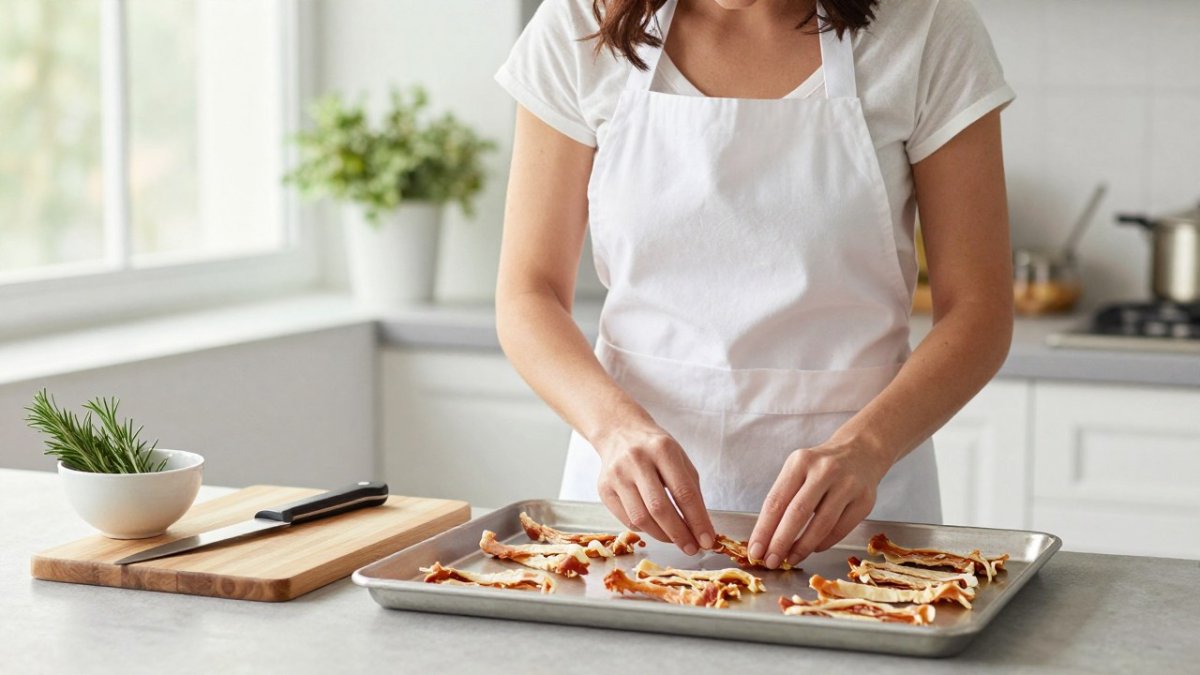
Arrange on trays. Lay slices flat on dehydrator trays, leaving space between them.
Dry fully. Set the dehydrator and let the slices dry until they are firm and dry to the touch, with no soft spots.
Cool and check. Let them cool, then snap one in half. It should be dry all the way through.

For a full walkthrough with timing and temperature details, see our step-by-step guide on how to dehydrate sweet potatoes for dogs safely.
Watch out: skipping the cook step leaves hard starches that are tough on a puppy's gut. Always cook or blanch before drying.
How Long to Dehydrate Sweet Potatoes for Dogs
Thin slices dry faster than thick ones. The exact time matters less than the result: the slice must be fully dry, with no soft center.
Check your dehydrator's manual for its recommended setting. Then judge by feel. A finished slice is firm, dry, and snaps when bent. If it bends like leather, it needs more time.
For detailed timing by slice thickness and appliance, our guide on how long to dehydrate sweet potatoes for dogs breaks it down.
Can I Feed My Dog Sweet Potato Every Day?
You can feed sweet potato most days in small amounts, but not as a free-for-all. Daily treats are fine if they stay small and fit within your puppy's daily calories. The key is portion control, not frequency alone.
Rotate treats so sweet potato is not the only reward. Mix in other single-ingredient options to keep the diet balanced. If you want a ready-made option so you are not dehydrating every week, our sweet potato snacks are made in small batches from single ingredients.
Choking, Texture, and Digestive Risks for Puppies
Choking is the risk most owners underestimate with dehydrated sweet potato, and puppies are more vulnerable than adult dogs for two reasons: their throats are smaller, and they have less practice chewing before swallowing. A piece that an adult dog would gnaw patiently can be gulped whole by an eager puppy.
Texture is the lever you control. A fully dried sweet potato slice can range from leathery to rock-hard depending on thickness and drying time. Leathery pieces bend and can tear into chunks that a puppy may swallow without chewing. Rock-hard pieces can crack a puppy tooth or splinter into sharp edges. The safest texture for puppies sits in the middle: firm enough to require chewing, soft enough to give slightly when pressed.
How Thickness and Hardness Affect Young Dogs
Slice thickness drives both drying time and risk. A 1/8-inch slice dries faster and becomes brittle; a 1/4-inch slice stays chewier and takes longer to dry fully. For puppies, aim for 1/8 to 3/16 inch and dry until the slice is firm but not brittle. If a slice snaps cleanly in half with a sharp edge, it is too hard for a young puppy, soften it by soaking briefly in warm water or cut it smaller.
A simple test: press the cooled slice between your thumb and forefinger. If it hurts or leaves a mark, it is too hard. If it squishes easily, it is under-dried and may spoil. The right feel is firm with a slight give.
Supervision and Chew Style
Most choking incidents happen when a puppy is left alone with a chew. Stay within arm's reach until the treat is gone, and watch how your puppy chews. Some puppies gulp, some gnaw, and some carry the treat around before eating it. Gulpers need smaller pieces and a softer texture. Gnawers can handle a slightly firmer slice but still need supervision.
If your puppy tries to swallow a piece whole, take it away and cut it smaller. Never pull a piece out of a puppy's mouth if it is already partly swallowed, that can push it further in. Instead, stay calm and let the puppy cough it up, and call your vet if the coughing does not stop.
Watch out: puppies that are teething, usually between 3 and 6 months, have sore gums and may chew harder or faster than usual. Check the treat texture more carefully during this stage and offer softer pieces.
Digestive Risks and When to Stop
Beyond choking, dehydrated sweet potato can cause gas, loose stools, or an upset stomach if a puppy eats too much too fast. The fiber and concentrated natural sugars are the usual culprits. Introduce one small piece at a time and wait 24 hours before offering another.
Stop feeding sweet potato and call your vet if you see vomiting, diarrhea lasting more than a day, itching, or swelling. These can signal a sensitivity or an unrelated issue that a vet should assess. Puppies with a history of digestive problems or food allergies should be cleared by a vet before trying any new treat.
At Five Local Dogs, we keep our treats to single ingredients for exactly this reason. Fewer ingredients mean fewer surprises for a sensitive tummy. Our treats are made by hand in small batches, with no preservatives or coatings, and our meats are sourced in the U.S.
Storing Dehydrated Sweet Potato Treats and Spotting Spoilage
Store dehydrated sweet potatoes in an airtight container in a cool, dry place. Moisture is the enemy of dried treats, so keep them dry.
Check for spoilage before each serving:
Smell: a sour or musty odor means toss it.
Look: fuzzy spots, dark patches, or sticky spots mean toss it.
Feel: soft or damp slices mean they were not dried enough or picked up moisture.
For storage timelines and how to spot spoilage, our guide on how long dehydrated dog treats last covers it in detail.
When to Ask Your Vet Before Feeding Sweet Potatoes
Talk to your vet before feeding sweet potatoes if your puppy has a health condition or a sensitive stomach.
Also check in if your puppy has had reactions to new foods before. A gradual introduction, one small piece at a time, tells you a lot. If you see vomiting, diarrhea, or itching, stop and call your vet.
At Five Local Dogs, we keep our treats to single ingredients for exactly this reason. Fewer ingredients mean fewer surprises for a sensitive tummy. Our treats are made by hand in small batches, with no preservatives or coatings, and our meats are sourced in the U.S.
Bringing a new puppy home comes with a long list of questions, and treats are near the top. If you want a simple, single-ingredient option you can trust, Five Local Dogs makes hand-sliced dehydrated chicken treats in small batches with no preservatives or artificial coatings. Our single-ingredient approach keeps things clear for picky eaters and sensitive stomachs alike. Get started with Five Local Dogs and give your puppy a treat you can feel good about.
Frequently Asked Questions
Are dehydrated sweet potatoes good for puppies?
They can be a good treat when served plain and in small amounts. Dehydrated sweet potatoes retain some of the fiber, vitamins, and minerals of the vegetable, and many puppies enjoy the chewy texture. The catch is portion control: treats should stay under about 10 percent of a puppy's daily calories. Skip any seasoning, salt, or sugar, and introduce them slowly over several days so you can watch for digestive upset.
How much sweet potato can a puppy eat per day?
A cautious starting point is one small piece, sized to your puppy's mouth. Work up gradually as you confirm your puppy's tummy response. Keep all treats, including dehydrated sweet potatoes, to a small share of daily calories so the complete puppy diet still does the heavy lifting. Ask your vet for an exact portion based on your puppy's weight and age.
Can puppies eat sweet potato skin?
Yes, if the skin is thoroughly washed and the potato is plain. The skin holds extra fiber, but it can also carry dirt and pesticide residue, so scrub it well under running water before slicing. Never feed skin that has been seasoned, and avoid green patches or sprouts entirely. If your puppy has a sensitive stomach, peel the potato first to make digestion easier.
How long do homemade dehydrated sweet potato treats last?
Keep properly dried sweet potato chews in an airtight container in a cool, dry place, and check them before each serving. They must be fully dry, not leathery or damp, before storage. Discard any piece that smells off, looks moldy, or feels sticky. For puppies, check each piece before serving and cut chews down to a size that matches your puppy's mouth.

Comments