
Are Natural Calming Treats Safe for Upset Stomachs?

Last Updated: November 7, 2026
Quick Summary
Natural calming treats can be a gentle add-on for everyday stress in dogs, but they are not medicine and cannot treat a medical cause of an upset stomach. Choose treats with a short, named ingredient list and a single protein, and introduce them one at a time. Call your vet first if your dog is vomiting, has blood in the stool, or seems weak.
Introduce one new calming treat at a time, offering a single small piece.
Wait 24 to 48 hours before offering more of the same treat.
Choose single-protein treats with no artificial colors, flavors, or preservatives.
Pause all treats and call your vet for repeated vomiting, blood in stool, or weakness.
Calming treats are not a replacement for veterinary diagnosis or care.
Is your dog's stomach sensitive?
Five Local Dogs makes single-ingredient chicken treats with no preservatives or coatings.
Table of Contents
Spotting the Signs of an Upset Stomach in Your Dog
An upset stomach shows up in a few clear ways. Watch for vomiting, loose stools, gas, drooling, lip-licking, or a dog that refuses food. Most mild cases pass within a day or two, but some signs need a call to your vet right away.
Start by noting what you see and when it started. Keep a short log of meals, treats, and any changes at home. That record helps your vet spot patterns quickly.
Anxiety-related stomach upset versus illness or food intolerance
Stress can upset a dog's stomach too. A dog that trembles during car rides, pants at thunderstorms, or gets loose stools before a visit to the groomer may be reacting to anxiety. Food intolerance usually shows up after a specific ingredient, and symptoms often repeat with the same food.
Illness is different. Blood in the stool, repeated vomiting, lethargy, or a swollen belly all need prompt veterinary care. Never assume a calming treat will fix a problem that has a medical cause.
What Natural Calming Treats Are Meant to Do
Calming treats are snacks made with ingredients that some owners use to help a dog relax. They are not medicine, and they cannot replace a vet's diagnosis.
Think of them as a gentle add-on for everyday stress, such as a busy weekend or a new routine.
Natural Ingredients to Look for in Calming Treats
Look for short ingredient lists with recognizable items. Single-ingredient or limited-ingredient treats make it easier to spot what a dog reacts to.
Single-protein meat or fish treats
Plain pumpkin or sweet potato for fiber
White rice or oat flour as gentle starches
Calming herbs listed by name, not as "natural blends"
No artificial colors, flavors, or preservatives
Calming ingredients: chamomile, valerian, and L-theanine
Check with your vet before adding a calming ingredient, especially for puppies, seniors, or dogs on medication.
Gentle, Single-Protein Options That Suit Sensitive Stomachs
Dogs with sensitive stomachs often do better with one protein at a time. For a deeper guide to gentle options, read healthy treats for sensitive stomachs. Chicken is a common starting point. Many owners also try fish, duck, venison, or rabbit when a dog reacts to chicken or beef.
Introduce one new protein at a time so you can tell which one works. If a dog has a known allergy, avoid that protein completely.
Ingredients to Avoid, Including Artificial Additives
Read labels before buying. To learn how to spot artificial preservatives on an ingredient list, see the guide linked here. Artificial colors, artificial flavors, and synthetic preservatives can irritate a sensitive gut. Heavy seasonings, excess fat, and long ingredient lists also raise the odds of trouble.
Artificial colors and dyes
Artificial flavors and synthetic preservatives
High-fat coatings or heavy sauces
Unfamiliar fillers or "mystery meat" labels
Treats with no artificial coatings are a safer choice for most sensitive dogs.
Making Homemade Dog Treats for Sensitive Stomachs Safely
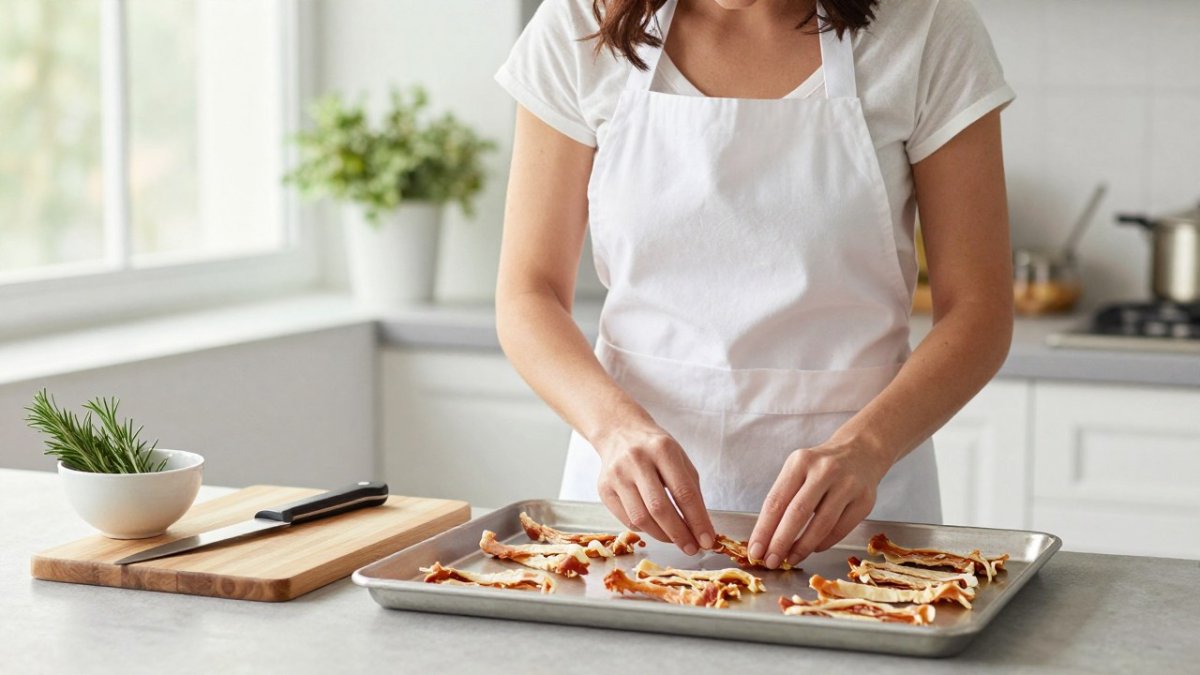
Homemade treats let you control every ingredient. A simple bland recipe uses plain cooked chicken breast, white rice, and a spoonful of pureed pumpkin. Bake or dehydrate until firm and let them cool completely.
Keep homemade batches small, since they spoil faster than commercial treats. Check any recipe with your vet, especially for long-term use, because homemade diets can miss key nutrients if they become a large part of a dog's meals.
How to Introduce New Treats to a Dog With a Sensitive Stomach
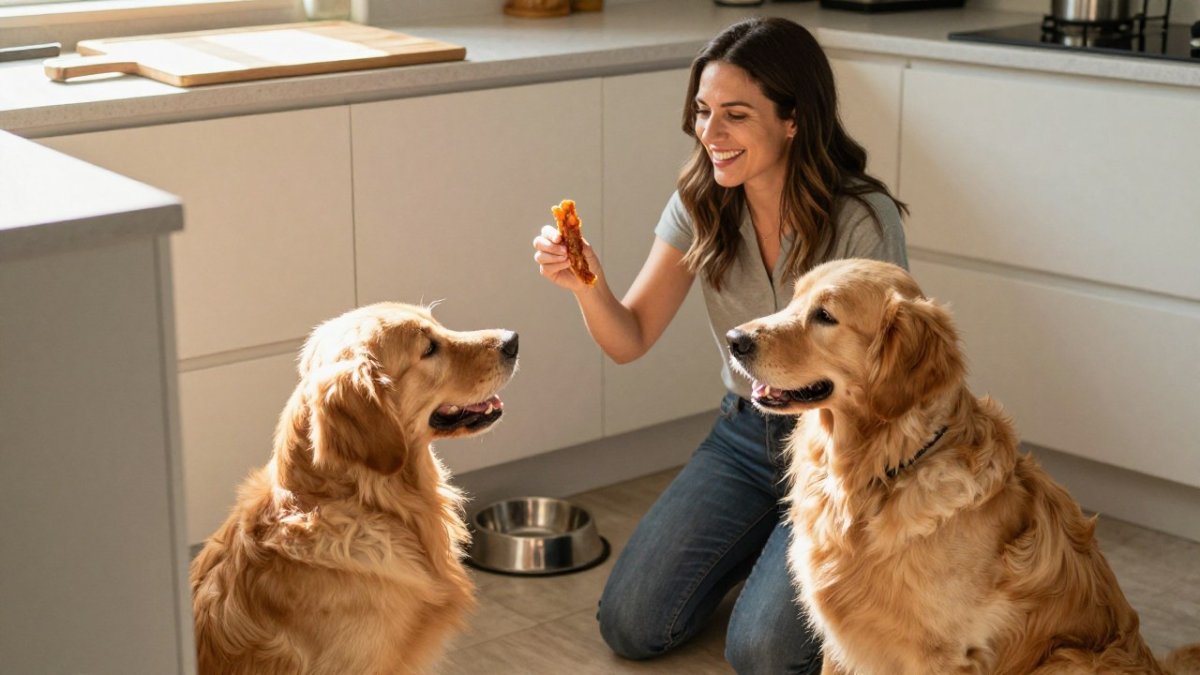
Go slowly. Offer one small piece of the new treat, then wait 24 to 48 hours before adding another. For a step-by-step transition guide to natural treats, follow the full plan. Keep the treat size tiny, about a pea-sized piece for small dogs and a larger piece for big dogs.
Pick one new treat and offer a single small piece.
Watch for stool changes, gas, or vomiting over two days.
If all is well, offer a little more each day.
Stop right away if symptoms appear, and call your vet.
!An owner's hand offering a small treat to a calm dog on a kitchen floor

Choosing the Best Dog Treats for Sensitive Stomach and Diarrhea
Choosing a treat for a dog with a sensitive stomach is really two decisions: whether to give a treat at all right now, and if so, which kind. For a curated list of treats already suited to sensitive stomachs, see best treats for dogs with sensitive stomachs.
Step 1: Decide whether this is a treat moment or a vet moment. If the dog is actively vomiting, has diarrhea more than a couple of times in a day, is refusing food, or seems lethargic, pause all treats and call your vet. A bland snack is not a treatment, and a calming treat will not fix a medical cause. If the dog is otherwise bright and eating, with mild or resolving symptoms, you can move to step 2.
Step 2: Match the treat to the symptom.
Anxious but digestively stable: a calming treat with a named single ingredient, introduced one at a time, is reasonable. Keep the rest of the diet unchanged so you can tell what caused any change.
Mild loose stools with no other signs: a plain bland snack, a small piece of cooked chicken breast, a spoonful of plain canned pumpkin, or a bit of plain white rice, is a better first move than a new calming product. These are short-term options, not complete meals.
Recovering from a bout of diarrhea: keep treats minimal and boring until stools are normal for a couple of days, then reintroduce one item at a time.
Known food allergy or intolerance: stay strictly within proteins and ingredients the dog has already tolerated. Do not use a calming treat that contains a protein the dog has reacted to, even in a small amount.
Step 3: Read the label like a skeptic. Look for a named protein first, a short ingredient list, and calming herbs listed by name with an amount. Skip artificial colors, artificial flavors, synthetic preservatives, heavy sauces, and high-fat coatings. A treat that lists "natural flavors" or a proprietary blend tells you almost nothing about what the dog is actually getting.
Step 4: Introduce gradually and dose by weight. Start with one small piece, roughly pea-sized for a small dog and a bit larger for a big dog, and wait 24 to 48 hours before increasing. Follow the label's weight-based serving guidance rather than guessing, and remember that a calming treat is still a treat: it counts against the dog's daily calories and can cause weight gain or loose stools if overdone. For a dog on a prescribed diet, confirm with your vet that any treat fits within the plan.
Step 5: Know when to stop. If a new treat brings on gas, loose stools, vomiting, or unusual drowsiness, stop it and note the date and the product. If symptoms continue after the treat is removed, or return every time it is offered, that is a signal to talk to your vet rather than to try a different brand.
Watch out: homemade bland snacks are not a balanced diet. A chicken-and-rice mix is fine for a day or two while the gut settles, but it is short on the vitamins and minerals a dog needs long term, and feeding it as a large share of the diet can create new problems. Keep portions small.
Our single-ingredient dehydrated chicken treats are made in small batches with no preservatives or artificial coatings. They are a treat, not a meal replacement, and they are not a substitute for veterinary care when symptoms point to illness.
The table below sums up which kind of treat fits each digestive situation, based on the steps above.
Situation | Suggested approach | Key caution |
Anxious but digestively stable | Calming treat with a named single ingredient | Keep the rest of the diet unchanged |
Mild loose stools, no other signs | Plain bland snack in small amounts | Short-term only, not a full meal |
Recovering from diarrhea | Minimal, boring treats until stools are normal for a couple of days | Reintroduce one item at a time |
Known food allergy or intolerance | Only proteins and ingredients already tolerated | Avoid any protein the dog has reacted to |
Vomiting, lethargy, refusing food | Pause all treats and call your vet | A treat will not fix a medical cause |
New treat causes gas or loose stools | Stop it and note the date and product | Talk to your vet if symptoms persist |
When to Call Your Veterinarian Before Giving Any Treat
Call your vet before offering any new treat if your dog has a diagnosed illness, a food allergy, or is very young or elderly. Call right away if your dog shows blood in the stool, repeated vomiting, weakness, or a swollen belly.
Never give calming treats in place of veterinary care. A vet can rule out medical causes and suggest a safe plan.
Ready to try a simple, single-ingredient treat? Shop Five Local Dogs for small-batch dehydrated chicken treats with no preservatives or artificial coatings.
Frequently Asked Questions
What is a natural stomach calmer for dogs?
Plain, easily digested foods are the most common natural stomach calmers. Cooked white rice, plain boiled chicken breast and pumpkin puree without added sugar or spices are frequently suggested by veterinarians for short periods of mild upset. Look for treats with a single protein and few ingredients, and avoid anything with added fats, dairy or artificial flavors. If symptoms are severe or persist, contact your veterinarian rather than relying on home remedies.
Can calming treats make a dog's upset stomach worse?
They can, particularly if they contain multiple botanicals, added oils, dairy or additives that the dog does not tolerate. Calming ingredients such as chamomile or valerian are not appropriate for every dog, and some people give them without checking for interactions with medications. Introduce any new treat slowly, one at a time, and stop if vomiting or diarrhea begins. Discuss any calming product with your veterinarian before use, especially for puppies, seniors or dogs with chronic conditions.
What ingredients should I avoid in treats for a dog with a sensitive stomach?
Avoid artificial colors, artificial flavors, artificial preservatives such as BHA and BHT, and fillers like corn or wheat if your dog reacts to them. Also check for high-fat ingredients, dairy, seasonings like garlic and onion, and long ingredient lists that make it hard to identify the likely trigger. Single-ingredient or limited-ingredient treats make it easier to pinpoint what a dog tolerates.
When should I call a veterinarian about my dog's upset stomach?
Call your veterinarian promptly if vomiting or diarrhea lasts more than 24 hours, if there is blood in the vomit or stool, if your dog is lethargic, refuses water, shows abdominal pain or swelling, or is a puppy, senior or has a chronic condition. Symptoms that come with restlessness or anxiety may still signal an underlying problem, so a professional check is the safest first step before relying on calming treats.

Comments