
7 Reasons Dog Treat Texture Matters More Than Flavor

Last Updated: November 1, 2026
Quick Summary
Dog treat texture matters more than flavor because dogs have far fewer taste buds than we do, so smell and mouthfeel do most of the work. A dog treat texture that feels wrong gets dropped on the floor no matter how good it smells, and texture also drives palatability, dental action, and safety.
Dogs experience a treat in three stages: smell first, then mouthfeel, then taste.
Crunchy treats take longer to finish and suit dogs that gulp; soft treats suit puppies and seniors.
A firm, fibrous texture scrapes some plaque before it hardens into tartar.
If you cannot dent a chew with a firm thumbnail press, it is too hard.
Assess texture at home with bend, nail, break, size, and watch tests.
Table of Contents
Why Dog Treat Texture Decides Whether Your Dog Eats It
Texture is the physical feel of a treat in your dog's mouth, and it often matters more than flavor. A dog treat texture that feels wrong gets dropped on the floor, no matter how good it smells. Owners of picky dogs often tell us that "premium" snacks get rejected after one sniff.
Here's the part most guides get wrong: dogs don't taste the way we do. They have far fewer taste buds, so smell and mouthfeel do most of the work. Below, we'll show you exactly how to read texture, match it to your dog, and avoid the chews that cause trouble.
The payoff is simple. Once you pick the right texture, treat time stops being a negotiation.
How Dogs Experience a Treat: Smell, Taste, and Mouthfeel
Dogs experience a treat in three stages: smell first, then mouthfeel, then taste. Smell decides whether your dog leans in. Mouthfeel decides whether your dog keeps chewing or spits it out. Taste is the last check, and it's weaker than most owners assume.
That order explains a lot of rejected snacks. A treat can smell amazing and still fail the second test. If it's too hard, too crumbly, or too sticky, your dog loses interest fast.
A common mistake is switching flavors when the real problem is texture. Before you buy a new protein, watch how your dog handles the current one. The answer is usually in the chew, not the taste.
Crunchy vs Soft Dog Treats: What the Difference Means for Your Dog
Crunchy and soft treats do different jobs, and the difference shows up in how your dog eats. Crunchy treats break with a snap and take longer to finish. Soft treats bend, tear easily, and disappear in seconds.
Here's how the two compare in practice:
Crunchy: more chewing, more crumbs, better for keeping a dog busy
Soft: faster to eat, easier for training, gentler on sore mouths
Chewy: the middle ground, with stretch and resistance
Crunchy treats suit dogs that gulp. The extra chewing slows them down. Soft treats suit puppies, seniors, and dogs with tender gums.
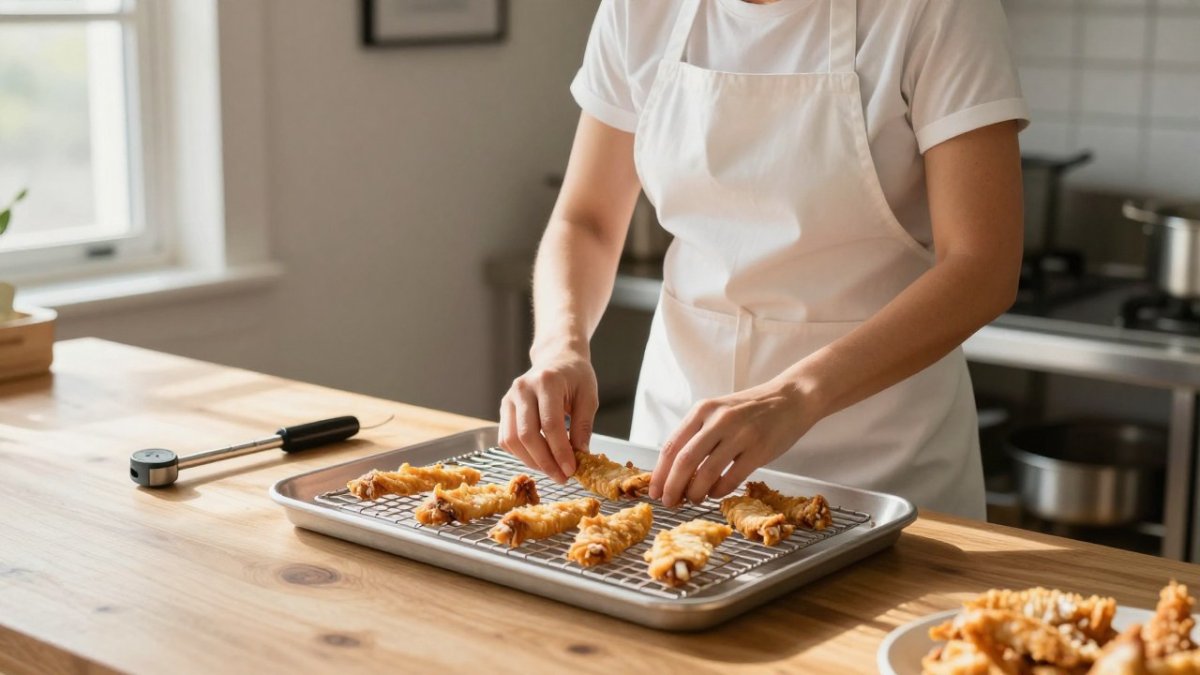
If you want to see the contrast in a real product, our Chicken Feet 10 Count is a good example of a crunchy, single-ingredient chew. It snaps and crunches, which is exactly what some dogs need.
How Texture Affects Palatability and Treat Acceptance
Texture drives palatability more than most owners realize. Palatability is how willing your dog is to accept and finish a food, and mouthfeel is a big part of that score. A treat that's hard to bite gets refused. A treat that's easy to hold and chew gets eaten.
Watch your dog next time you offer something new:
Does your dog sniff, then walk away? Likely a smell or hardness problem.
Does your dog take it, then drop it? Likely mouthfeel.
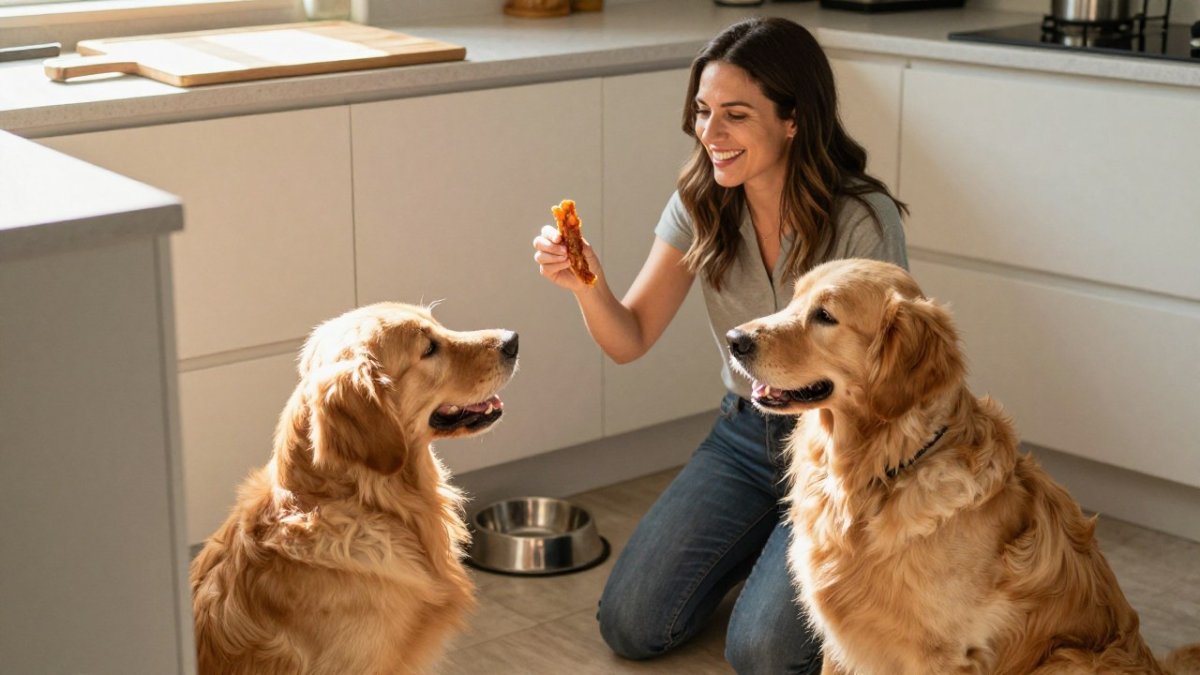
Does your dog hold it and chew slowly? You've found a winner.
For picky eaters, texture variety often does more than flavor swaps. Our companion article on hand-sliced treats for picky eaters goes deeper on this.
Matching Texture to Your Dog's Size and Chewing Ability
Match texture to your dog's size and chew strength, not to the label on the bag. A big dog can handle dense, thick chews. A small dog needs thin, bendable pieces it can actually grip. Getting this wrong is the fastest route to a dropped treat or a worried owner.

For small dogs, thin pieces work best. Larger dogs usually do better with thicker, denser chews that take real effort.
Puppies, Seniors, and Dogs With Dental Issues
Puppies need soft, small pieces while their adult teeth come in. Seniors often do better with softer textures, especially if they've lost teeth or have sore gums. Dogs with diagnosed dental issues should see a vet before trying anything hard.
Watch out: hard chews can crack a weakened tooth. If your dog has had dental work, ask your vet which textures are safe before you buy.
Texture and Dental Health: What the Evidence Actually Shows
Dental claims on treat bags are often overstated, so it helps to separate what chewing texture can realistically do from what marketing implies. The honest answer: texture matters for teeth, but mostly through mechanical action and time, not through any ingredient magic.
Here is the mechanism, step by step:
Saliva flow. Chewing, any chewing, stimulates saliva, which helps buffer acids and rinse loose debris from tooth surfaces.
Mechanical abrasion. A firm, fibrous texture drags across the tooth surface as the dog works, scraping some plaque before it hardens into tartar. Soft treats that dissolve in seconds provide almost none of this.
Chewing time. This is the variable that actually separates textures. A chew that occupies a dog for several minutes delivers far more contact between texture and tooth than a treat swallowed in one bite.
Gum stimulation. Resistance against the gums during chewing can help maintain gum tissue tone, though this is a supporting effect, not a treatment.
What texture cannot do is remove established tartar, treat periodontal disease, or replace brushing. Once plaque mineralizes into tartar, it is bonded to the tooth and requires a professional scaling. No chew, regardless of how it is shaped or textured, reverses that.
How to Judge a Dental Claim
The most useful filter for owners is the Veterinary Oral Health Council (VOHC) Accepted Products list. The VOHC reviews submitted evidence and grants a seal only to products that meet its standards for reducing plaque or tartar (Earn the VOHC Seal). A bag that says "cleans teeth" with no VOHC seal is making an informal claim; a bag with the seal has at least been evaluated against a defined protocol. That distinction is the single fastest way to sort real dental positioning from decoration.
A few practical rules follow from the mechanism:
Longer beats harder. A moderately firm chew that lasts five minutes does more for teeth than a rock-hard chew that lasts thirty seconds before the dog gives up.
Soft is not useless, just limited. Soft training treats are fine for behavior work; they simply should not be counted toward dental care.
Shape matters alongside texture. Textures that wrap or flex around the tooth surface contact more area than flat, smooth pieces.
Brushing still wins. Veterinary dental guidance generally treats daily brushing as the gold standard, with chews as an adjunct.
Key Takeaway Texture supports dental health mainly by extending chewing time and providing gentle abrasion. Look for the VOHC seal when a product makes a dental claim, and treat every chew as a supplement to brushing, never a replacement.
If dental support is your goal, prioritize chews that keep your dog working for minutes rather than seconds. You can browse beef trachea treats that support dental health and satisfy chewing instincts.
Choking, Fracture, and Swallowing Risks by Texture
Texture is a safety category, not just a preference. Different textures fail in different ways, and knowing which failure mode belongs to which texture is what lets you prevent it. Here is the breakdown by texture type, with the mechanism behind each risk.
Hard and Brittle Textures
Dense, brittle chews, think thick dried bone, antler-style pieces, and very hard baked biscuits, fail in two ways. First, they can fracture teeth, most often the large upper fourth premolar (the carnassial tooth) that bears the most chewing force. Second, they can splinter into sharp shards as they wear down. The fracture risk climbs with age, because older teeth are more brittle, and with any history of dental work.
Practical rules:
The thumbnail test. If you cannot make any dent in the chew with a firm thumbnail press, it is harder than most dogs' teeth should be asked to handle.
Retire the nub. Once a hard chew wears down to a piece small enough to swallow, take it away. The final third of any chew is the most dangerous part.
Skip splintering materials. If a chew breaks into sharp-edged pieces when you snap a corner, it is not a safe texture for a gulper.
Small and Dense Textures
Small, dense pieces, jerky bits, firm training cubes, compressed sticks, are the leading choking shape for dogs that gulp. The mechanism is simple: a piece small enough to clear the back of the mouth without triggering a chew can lodge in the throat. Size relative to the dog's mouth, not the dog's enthusiasm, is the deciding factor.
Size up for gulpers. A treat should be large enough that the dog must hold it with a paw or work at it, not small enough to inhale.
Match to mouth width. As a rule of thumb, a treat narrower than the dog's muzzle is easy to swallow whole; wider pieces force chewing.
Supervise, always. Gulpers should never be left alone with any chew, regardless of texture.
Soft and Gummy Textures
Soft, sticky textures are low fracture risk but high swallow risk. A gummy treat can be swallowed in one motion by a fast eater, and sticky pieces can adhere to the roof of the mouth or throat. These textures are excellent for puppies, seniors, and training, but only when sized so the dog must chew at least once.
Chewy and Fibrous Textures
Fibrous, chewy textures, dried tendons, collagen sticks, trachea, sit in the middle. They resist swallowing and rarely splinter, but they can soften into a piece a determined dog swallows whole near the end. The same nub rule applies: remove the last small piece.
Watch Out Any treat small enough to swallow whole is a choking risk for a dog that does not chew. When in doubt, size up, supervise, and take the treat away once it wears down to a swallowable piece. Dogs with a history of dental work, weakened teeth, or a diagnosed swallowing issue should have texture cleared by a veterinarian before trying anything hard.
A short supervision checklist covers most of the risk:
Match treat size to your dog's mouth, not its excitement
Stay in the room for hard and fibrous chews until they wear down
Remove any chew that splinters or breaks into sharp pieces
Never offer a texture your dog tries to swallow without chewing
Ask your vet about hard textures if your dog has had dental work or tooth loss
Best Dog Treats for Chewing: Texture for Training vs Enrichment
Training treats and enrichment chews need opposite textures. Training rewards should be small, soft, and quick, so your dog can reset and repeat. Enrichment chews should be long-lasting and resistant, so your dog stays busy.
For training, small soft pieces win. You're rewarding behavior, and speed matters. A treat that takes two minutes to chew kills the momentum of a session.
For enrichment, you want staying power. Yak cheese puffs are a long-lasting option that keeps dogs engaged.
Single-Ingredient Dog Treats and Why Texture Starts With Ingredients
Texture starts with ingredients and processing. A single-ingredient treat has nothing to hide behind. Its texture comes from the meat itself, how it's cut, and how it's dried.
When a treat contains one thing, the chew you feel is the ingredient. Add binders, fillers, or coatings, and texture becomes something engineered rather than natural.
How to Assess Treat Texture at Home and Transition Between Textures
You can assess dog treat texture at home in under a minute, using your hands and your dog's reaction. Skip the guesswork and run this quick check:
Bend test: Can you flex the treat slightly? If it snaps, it's hard.
Nail test: Press a fingernail in. A deep dent means soft; no dent means dense.
Break test: Snap it. Sharp, splintery edges are a safety flag.
Size check: Is it bigger than your dog's throat? If not, size up.
Watch test: Offer it and observe. Dropping or gulping tells you plenty.
When you switch textures, do it slowly. Mix a little of the new texture with the old over several days. Sudden swaps can upset sensitive stomachs, even when both treats are single-ingredient.
Choosing the Right Texture From Five Local Dogs
Choosing the right texture comes down to three questions: how big is your dog, how hard does it chew, and what job is the treat doing? Answer those, and the choice gets simple.
Here's a quick summary to scan:
Your Dog | Best Texture | Good For |
Small dog, light chewer | Thin, bendable | Training, gentle chewing |
Puppy | Soft, small pieces | Rewarding, teething mouths |
Senior with dental issues | Soft, thin | Easy chewing, vet-approved |
Strong chewer | Dense, long-lasting | Enrichment, chewing time |
Picky eater | Varied cut and feel | Testing acceptance |
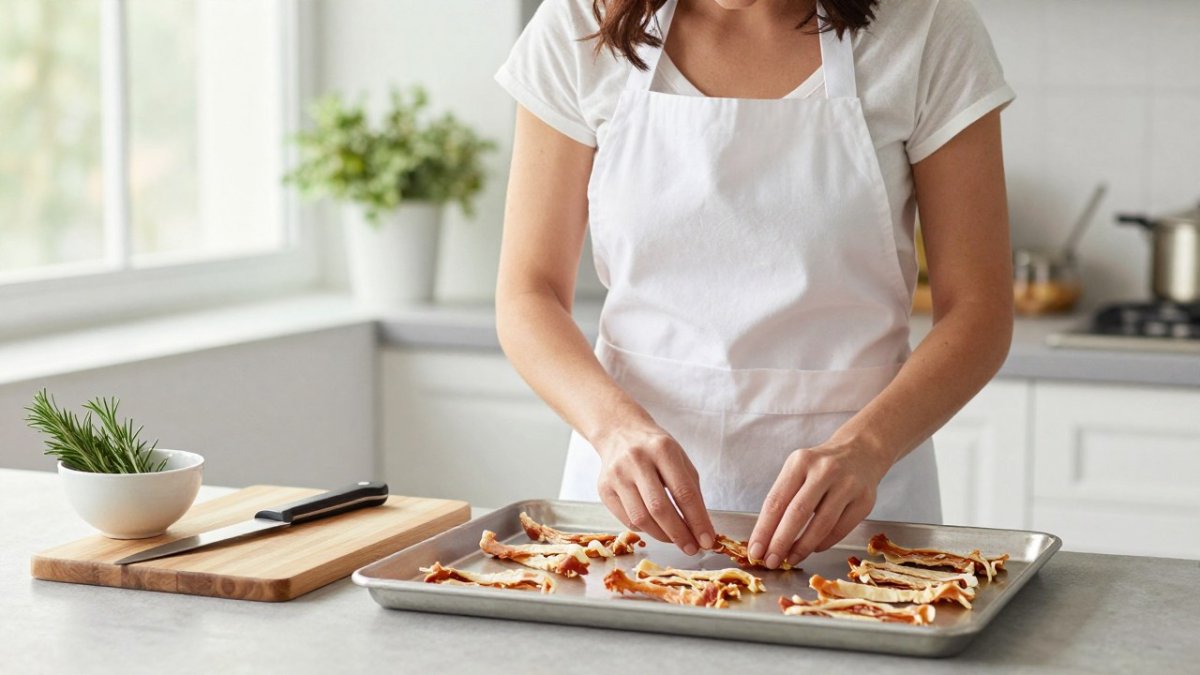
At Five Local Dogs, every treat is single-ingredient and free from preservatives or coatings. We hand-slice chicken in small batches, and we source from farms in the U.S.
Frequently Asked Questions
Why do dogs prefer certain treat textures?
Dogs judge a treat by smell first, then by how it feels in the mouth. A texture that matches their chewing ability is easier to eat and rewards them faster, so they come back for it. Hard treats can be uncomfortable for small or older dogs, while very soft treats disappear before a dog feels satisfied. The right dog treat texture balances resistance and ease so the dog can chew comfortably and still feel like it earned the reward.
Are crunchy or soft dog treats better?
Neither is universally better; it depends on the dog and the job. Crunchy treats take longer to chew and can help scrub surface plaque, which suits healthy adult dogs. Soft treats break apart quickly, making them handy for fast training rewards and for puppies or seniors with weaker teeth. Many owners keep both on hand and switch based on whether they are training, rewarding calm behavior, or offering a longer chew.
What texture is easiest for puppies or senior dogs to chew?
Thin, pliable pieces are easiest for puppies and senior dogs. Look for treats that bend rather than snap, and that can be torn into small pieces by hand. Avoid thick, rock-hard pieces that require strong jaw force, and always supervise while your dog eats.
How does texture differ between dehydrated and other dog treats?
Dehydration removes moisture slowly at low heat, which leaves a firm but slightly pliable texture and concentrates flavor and smell. Baked biscuits tend to be drier and crunchier, while soft commercial treats often rely on binders and moisture to stay chewy.
Picking the right texture shouldn't feel like a gamble. Five Local Dogs makes single-ingredient dehydrated chicken treats with no preservatives and no artificial coatings, hand-sliced in small batches for consistent quality. Get started with Five Local Dogs and give your dog a treat that feels as good as it smells.
Comments