
Natural Dog Treats for Training: 2026 Buyer's Guide

Table of Contents
Natural Dog Treats for Training: What Actually Matters
Why Treat Quality Changes Training Outcomes
How to Read a Training Treat Label
Ingredients to Avoid in Training Treats
Best Treats for Dogs with Allergies
Building a Chicken-Free Training Plan
Reading Labels for Hidden Allergens
Training Around Allergies Without Losing Momentum
How to Use Treats for Positive Reinforcement
High-Value vs. Low-Value Rewards
Treat-to-Meal Ratio: How Many Treats Is Too Many?
What 12 Treats Per Day Actually Looks Like
The Subtraction Method
Why Frequency Matters as Much as Type
When to Adjust the Ratio
Storing Training Treats So They Stay Fresh
Budget-Friendly Bulk Training Strategies
Choosing the Right Natural Dog Treats for Your Training Plan
Frequently Asked Questions
Last Updated: October 4, 2026
Natural Dog Treats for Training: What Actually Matters
Most dog owners spend more time choosing a leash than choosing what goes into their treat pouch. That's backwards. The treat is the paycheck, and if the paycheck is junk, the training stalls. This guide from Five Local Dogs breaks down what separates natural dog treats for training from the dyed, coated, preservative-heavy snacks that fill most store shelves.
Here's the core argument: treat quality isn't a wellness luxury, it's a training variable. A treat your dog will work for, in a portion that won't wreck their waistline, does more for your training plan than any clicker or cue.
Why Treat Quality Changes Training Outcomes
Training runs on motivation. A dog that's bored by the reward checks out, no matter how clean your timing is. Natural dog treats for training tend to win on two fronts: smell and digestibility.
Artificial preservatives and coatings don't add value for the dog. They add shelf life for the seller. A single-ingredient dehydrated chicken treat, by contrast, is basically meat with the water removed, which concentrates the aroma dogs actually respond to.
There's a practical edge too. Rich, greasy treats can trigger loose stools, and a dog with an upset stomach isn't learning anything. Cleaner ingredients mean fewer mid-session bathroom breaks and more repetitions logged.
Key Takeaway The reward isn't a bribe, it's the feedback signal. If the treat is low-value or hard to digest, you're weakening the exact mechanism you're trying to build.
How to Read a Training Treat Label
Start with the ingredient list, not the front of the bag. Marketing claims live on the front. Facts live on the back.
A short list is a good sign. "Chicken" beats "chicken, wheat flour, glycerin, artificial flavor, Red 40." You want to recognize every word. If you need a chemistry background to parse it, put it back.
Ingredients to Avoid in Training Treats
Artificial preservatives like BHA, BHT, and ethoxyquin
Artificial colors, which exist for the human buying the bag, not the dog eating it
Added sugars and syrups, common in soft chews
Propylene glycol, used to keep semi-moist treats pliable
Unnamed "meat meal" or "by-product", which tells you nothing about source
A common mistake is assuming "natural" on the label means much. The term is loosely regulated for pet food, so a bag can say "natural" and still carry synthetic additives. Read the actual list.
Best Treats for Dogs with Allergies
For allergy-prone dogs, the safest route is fewer ingredients, not more. Every added component is another chance for a reaction, and training treats are a common hidden trigger because owners hand out so many of them.
That's why single-ingredient and limited-ingredient options dominate this category. One protein, nothing else. If your dog reacts, you know exactly what caused it. If they thrive, you know exactly what to keep buying.
Building a Chicken-Free Training Plan
Chicken is one of the most common protein allergens in dogs, which creates a real problem: most training treats on the shelf are chicken-based. If your dog is chicken-sensitive, you need a rotation that keeps motivation high without triggering a reaction.
Start by identifying safe proteins. Novel proteins like venison, duck, rabbit, or whitefish are common alternatives, but "novel" only means novel to your dog. If they've eaten lamb before, lamb isn't novel anymore.
A practical chicken-free rotation looks like this:
High-value reward: Dehydrated liver from a safe protein (beef, venison, or duck)
Medium-value reward: Dehydrated whitefish or rabbit pieces
Low-value reward: Limited-ingredient biscuits made with a single safe protein
Keep a written log of every protein your dog eats and any reaction that follows. Patterns emerge over weeks, not days. A treat that seems fine on Monday may show up as itching by Thursday.
Reading Labels for Hidden Allergens
Chicken doesn't always appear as "chicken." Watch for these terms on ingredient lists:
Chicken meal, chicken fat, chicken broth, chicken liver
Poultry, poultry meal, poultry by-product
Egg (often grouped with poultry sensitivities)
Natural flavor (can be derived from any protein source)
If the label says "natural flavor" without specifying the source, treat it as unknown and avoid it during an elimination trial.
For dogs with diagnosed sensitivities, novel proteins can help, but only under a vet's guidance. Don't self-diagnose an allergy. If you suspect a food sensitivity, work with your veterinarian to identify the trigger before overhauling the diet. The FDA's guidance on pet food and ingredient safety is a solid starting point for understanding what's actually in the bag.
Watch Out Switching to a new protein without a vet's input can muddy the picture. If your dog is mid-elimination diet, adding a random treat undermines weeks of work. Even a "safe" treat can derail the trial if it introduces an untested ingredient.
Training Around Allergies Without Losing Momentum
A common mistake is pausing training entirely during an elimination diet. You don't have to. Use the safe protein your vet has approved as your high-value reward, and use your dog's regular kibble (if it's part of the approved diet) as the low-value reward for easy repetitions.
The goal is to keep the training habit alive while you sort out the allergy picture. Once you know the safe proteins, you can build a full reward hierarchy around them.
How to Use Treats for Positive Reinforcement
Positive reinforcement works by pairing a behavior with an immediate, rewarding consequence. The treat isn't a payment for a finished trick, it's a marker that says "that exact thing, right then."
Timing beats quantity every time. A tiny piece delivered within a second of the behavior teaches more than a handful handed over three seconds late.

High-Value vs. Low-Value Rewards
Not all rewards are equal, and that's a feature, not a flaw. Match the reward to the difficulty of the task.
Reward Level | Example | Best Used For |
High-value | Dehydrated liver, chicken | New skills, distractions, recall |
Medium-value | Dehydrated chicken pieces | Proofing known behaviors |
Low-value | Plain biscuits, kibble | Easy repetitions, group classes |
Save the best stuff for the hardest asks. If you hand out liver for a sit your dog has known for two years, you've spent your best card on nothing.
Pro Tip Cut treats into pea-sized pieces. A dog cares about the number of rewards, not the size. Ten tiny pieces teach more than three big ones and add far fewer calories.
Treat-to-Meal Ratio: How Many Treats Is Too Many?
A rough rule: training treats should make up no more than about 10 percent of your dog's daily calories. The rest comes from a balanced meal. But "10 percent" means nothing without the math behind it.
Here's the formula most guides skip:
Step 1: Find your dog's daily calorie target.
A common starting point is 30 calories per pound of body weight for a moderately active adult dog. A 40-pound dog lands around 1,200 calories per day. Senior, sedentary, or weight-loss dogs need less; working or highly active dogs need more. Your vet can give you a precise number.
Step 2: Calculate the treat budget.
10 percent of 1,200 calories is 120 calories per day for treats. That's your ceiling.
Step 3: Divide by treat calories.
A small piece of dehydrated chicken or liver is roughly 5 to 15 calories, depending on size. At 10 calories per piece, 120 calories buys you about 12 treats per day.
That sounds generous until you do the math on a real session. A single training session can easily burn through 20 to 30 small treats. Stack three sessions a day and you're feeding a second dinner.
What 12 Treats Per Day Actually Looks Like
If your dog's treat budget is 12 pieces, you have to spend them strategically:
New behaviors and recall: 6 to 8 pieces of high-value reward
Proofing known behaviors: 3 to 4 pieces of medium-value reward
Easy repetitions and group class: use kibble from the meal portion, not the treat budget
This is why the high-value vs. low-value distinction matters so much. If every reward is liver, you run out of budget before you run out of session.
The Subtraction Method
The fix is subtraction, not denial. If you're training heavily, pull back the meal portion to compensate. Use part of your dog's regular kibble as low-value rewards for easy reps, and reserve the good stuff for hard ones. This keeps weight management on track while keeping motivation high.
A practical approach: measure out your dog's normal meal, then set aside 20 to 25 percent of it as "training kibble" for the day. Feed the rest at mealtime. The training kibble becomes your low-value reward pool, and your 10 percent treat budget stays reserved for high-value moments.
Why Frequency Matters as Much as Type
Treat frequency matters as much as treat type. A dog getting rewarded constantly stops valuing the reward. Reward the behavior you want to see again, and skip the rest.
If you're burning through 30 treats in a 10-minute session, you're not training, you're feeding. Space rewards out as the behavior solidifies. Early sessions need more reinforcement; proofed behaviors need less.
Pro Tip Weigh your treats once. A kitchen scale that reads in grams takes the guesswork out of calorie math. Ten grams of dehydrated chicken is roughly 30 to 40 calories, which means a 3-gram piece is about 10 calories. Once you know your piece size, you can count treats instead of weighing them every time.
When to Adjust the Ratio
Some situations call for a higher treat percentage:
Puppies: Growing dogs burn more calories and have smaller stomachs, so treat percentage can run higher temporarily
High-distraction environments: A park or busy street may require higher-value, more frequent rewards
Medical conditions: Dogs on prescription diets need vet guidance before adjusting meal portions
Some situations call for a lower percentage:
Weight-loss plans: Every calorie counts, so treat budget may need to drop below 10 percent
Senior dogs: Lower activity means lower daily calorie needs
The 10 percent rule is a starting point, not a law. The real goal is keeping your dog at a healthy weight while keeping training effective. If you can't feel your dog's ribs without pressing, the treat budget is too high.
Storing Training Treats So They Stay Fresh
Dehydrated treats are shelf-stable but not indestructible. Moisture is the enemy.
Keep them in an airtight container away from heat and direct sunlight. A resealable bag works for short-term storage, but a hard-sided container with a gasket does better for the long haul.
Your treat pouch is the weak link. Pouches trap moisture and crumbs, and a warm pouch on a summer walk turns into a breeding ground. Empty and wipe it out after each session.
If a treat smells off, looks discolored, or feels tacky, toss it. A dog's nose knows before yours does, and a stale reward is a poor motivator.
Budget-Friendly Bulk Training Strategies
Training treats get expensive fast when you're buying small bags weekly. Buying in bulk and breaking it down yourself cuts the per-treat cost substantially.
Here's how to stretch a budget without sacrificing quality:
Buy larger bags of single-ingredient treats and portion them into smaller containers
Cut treats smaller so each bag lasts longer
Use kibble for easy reps and save premium treats for hard ones
Rotate proteins so your dog doesn't get bored of the same reward
Buy direct from small producers, which often means fresher product at a fairer price
The cheapest treat is the one your dog actually works for. A bargain bag that gets ignored is money wasted.
Choosing the Right Natural Dog Treats for Your Training Plan
Match the treat to the dog, the task, and the budget. There's no single best answer, but there is a decision path.
Picky eater? Lead with aroma. Dehydrated chicken and liver tend to outperform dry biscuits.
Sensitive stomach? Go single-ingredient and introduce slowly.
High-volume trainer? Mix low-value kibble with a few high-value pieces.
Allergy-prone dog? Limited ingredients, vet guidance, one variable at a time.
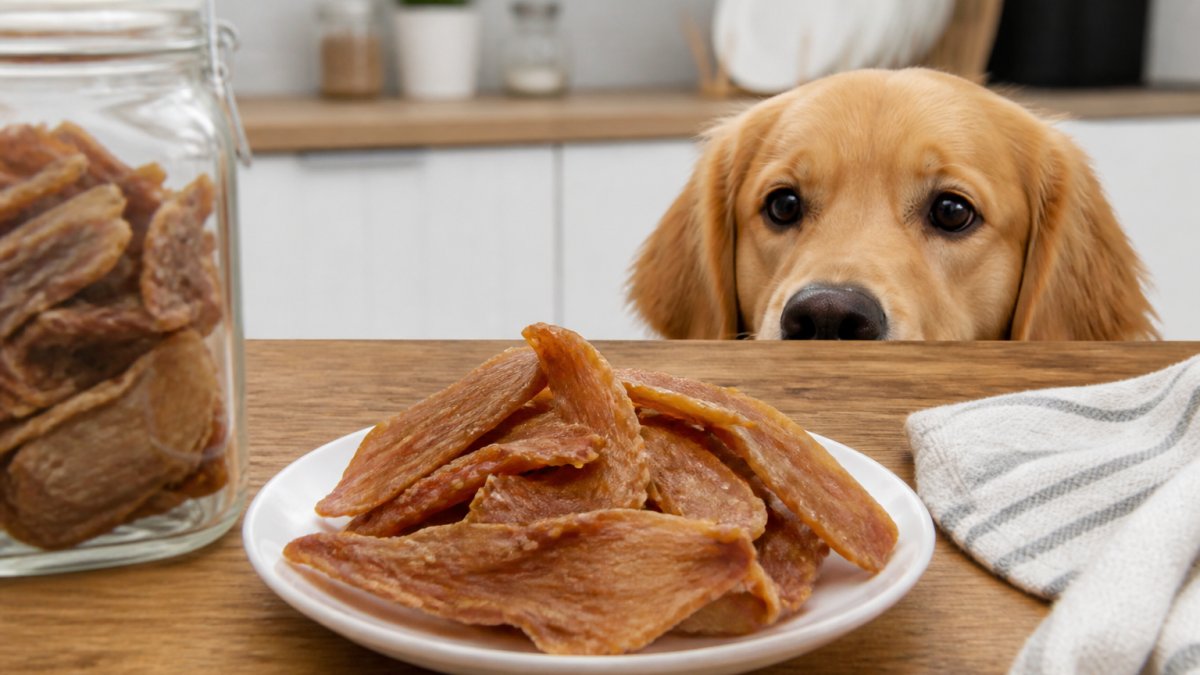
At Five Local Dogs, we make single-ingredient dehydrated chicken treats with no preservatives and no coatings, hand-sliced in small batches from chicken sourced from farms in the U.S. It's the kind of treat that works as a high-value reward without a long ingredient list to worry about.
Whatever you choose, buy a small amount first. Test palatability and digestion before committing to a bulk order.
Frequently Asked Questions
What are the healthiest treats for training my dog?
The healthiest training treats are single-ingredient or limited-ingredient options with no artificial preservatives, fillers, or added colors. Dehydrated lean proteins like chicken or fish work well because they are nutrient-dense, easy to digest, and low in caloric density per piece. Look for treats that are hand-sliced or cut into bite-sized morsels so you can reward frequently without overfeeding. Checking the label for a short ingredient list is the fastest way to judge quality.
Are single-ingredient treats better for training?
Single-ingredient treats offer two training advantages. First, they reduce the risk of triggering food sensitivities, which matters for dogs with allergies or sensitive stomachs. Second, they tend to have a clean, concentrated flavor profile that dogs find highly motivating. In practice, a single-ingredient dehydrated chicken treat delivers a high-value reward without the filler ingredients that dilute palatability or add empty calories.
How many training treats should a dog have per day?
A common guideline is to keep treats under 10 percent of your dog's daily caloric intake. For a typical 30-pound dog eating about 700 calories per day, that leaves roughly 70 calories for treats. If you are using small, bite-sized pieces during a training session, that can add up to 15 to 25 pieces depending on the treat's caloric density. Adjust the number based on your dog's weight, activity level, and the size of each piece.
Can natural treats help with dog training focus?
Yes. High-value natural treats, especially those with a strong flavor profile and soft texture, can sharpen a dog's focus during training sessions. The key is choosing a reward that is more motivating than the environment. For picky dogs or dogs with allergies, a single-ingredient treat that they genuinely enjoy becomes a reliable tool for behavioral reinforcement. Pairing the right treat with positive reinforcement and short, consistent sessions produces the best results.
Training a dog is really a test of consistency, and your treats are part of that consistency. If the reward is clean, fresh, and genuinely motivating, every session builds on the last. Five Local Dogs makes that part simple: single-ingredient dehydrated chicken, no preservatives, no coatings, hand-sliced in small batches. Shop with Five Local Dogs and give your training plan a reward worth working for.
SHOP

Comments