
How to Read Dog Treat Labels: A Pet Owner's Guide

Updated: Sep 16
Table of Contents
Anatomy of a Dog Treat Label: Where to Look First
Decoding the Ingredient List and Descending Order of Weight
Understanding Ingredient Splitting
Guaranteed Analysis: What Crude Protein and Fat Really Mean
Moisture Content and Dry Matter Basis
Fat Content and Caloric Density
Fiber and Ash: The Overlooked Numbers
Treat-Specific Considerations
What to Avoid in Dog Treats: A Red Flag Ingredient Checklist
Artificial Preservatives, Colors, and Fillers
How to Spot Artificial Preservatives on a Label
Single-Ingredient Dog Treats Benefits: Why Less Is More
Nutritional Adequacy and Label Claims: What Is and Isn't Regulated
The Nutritional Adequacy Statement: Why Treats Don't Carry One
The 10% Rule and Caloric Density
How to Calculate Treat Calories
What "Natural," "Premium," and "Human-Grade" Actually Mean
The "Natural Flavor" Loophole
What to Verify Before You Buy
Conclusion: Your Checklist for Confident Treat Shopping
Frequently Asked Questions
Last Updated: September 7, 2026
Learning how to read dog treat labels is one of the most valuable skills you can develop as a pet owner, yet most of us glance at the front of the bag and call it a day, and the fine print on dog treat labels often gets skipped entirely. The front promises "natural" and "premium," but the real story lives in the fine print on the back. Below, we'll show you exactly how to decode that panel so you can shop with total confidence.
Anatomy of a Dog Treat Label: Where to Look First
The most important information on any dog treat label sits in two places: the ingredient list and the guaranteed analysis panel. Ignore the marketing claims on the front of the package entirely. Flip the bag over and start with the ingredient list, which must appear in descending order of weight, meaning the first ingredient is present in the highest amount.

You should also locate the guaranteed analysis, the nutritional adequacy statement, and the feeding guidelines before you buy. A label that lacks any of these components is a red flag. In the United States, the Association of American Feed Control Officials (AAFCO) sets the standards for what must appear on pet food and treat packaging, and reputable brands follow those rules closely.
Decoding the Ingredient List and Descending Order of Weight
Reading the ingredient list requires understanding that order equals quantity. The first five ingredients typically make up the bulk of the treat, so if a named meat like "chicken" or "beef" appears first, that is a strong start. If the first ingredient is corn, wheat, or a vague term like "meat meal," the treat is likely built on fillers rather than protein.
Understanding Ingredient Splitting
A common trick manufacturers use is ingredient splitting, where a single source is divided into multiple sub-ingredients to push it lower on the list. For example, a label might list "chicken, corn, corn gluten meal, and corn bran" separately, making it appear that chicken is the primary ingredient when corn products actually dominate. When you see the same base ingredient repeated in several forms, treat it as one combined source and reconsider the purchase.
Guaranteed Analysis: What Crude Protein and Fat Really Mean
The guaranteed analysis panel lists minimum percentages of crude protein and crude fat, along with maximum percentages of crude fiber and moisture. The term "crude" refers to the testing method used, not the quality of the ingredient. The Association of American Feed Control Officials (AAFCO) defines the laboratory procedures, specifically the Kjeldahl method for protein and ether extraction for fat, that measure these components. The test measures total nitrogen or total fat content, not the biological quality of the source. A guaranteed analysis of 25% crude protein tells you nothing about whether that protein comes from whole chicken breast or ground chicken feathers.
Moisture Content and Dry Matter Basis
Moisture content matters more than most owners realize, especially when comparing fresh treats to kibble. A soft, chewy treat might contain 30% moisture, while a dehydrated jerky treat might contain only 10%. The guaranteed analysis percentages are calculated on an "as-fed" basis, meaning they include the water weight. This makes direct comparisons between treats with different moisture levels misleading.
To compare fairly, you must convert both products to a dry matter basis. The formula is straightforward:
Dry matter percentage = 100% − moisture percentage
Dry matter protein = (protein percentage ÷ dry matter percentage) × 100
Let's walk through a real comparison:
Treat A (soft chew): 18% crude protein, 30% moisture
Dry matter = 100 − 30 = 70%
Dry matter protein = (18 ÷ 70) × 100 = 25.7%
Treat B (dehydrated jerky): 30% crude protein, 10% moisture
Dry matter = 100 − 10 = 90%
Dry matter protein = (30 ÷ 90) × 100 = 33.3%
On the label, Treat B looks dramatically higher in protein (30% vs. 18%). After conversion, the gap narrows to 33.3% vs. 25.7%, still meaningful, but not as extreme as the label suggests. Conversely, a fresh or frozen treat with 70% moisture will show a very low protein percentage on the label even if it is nearly pure meat.
Fat Content and Caloric Density
Crude fat is the most calorie-dense macronutrient, providing 8.5 kcal per gram compared to 3.5 kcal per gram for protein and carbohydrates. A treat labeled with 20% crude fat will be significantly more calorie-dense than one with 5% fat, even if their protein percentages are similar. High-fat treats are often more palatable, but they can quickly blow through the 10% daily caloric budget.
Fiber and Ash: The Overlooked Numbers
Crude fiber is listed as a maximum, and it represents the indigestible plant material in the treat. For most treats, a fiber content under 5% is reasonable; higher levels often indicate grain hulls or other low-cost fillers. The guaranteed analysis does not list ash, but it is present, ash represents the mineral content remaining after combustion. Treats made from whole meat typically have lower ash than those containing bone meal or meat by-products.
Treat-Specific Considerations
Treats occupy a unique labeling category. Unlike complete and balanced dog foods, treats are not required to meet AAFCO nutrient profiles, and the guaranteed analysis is not subject to the same verification standards. The FDA requires that guaranteed analysis values be accurate, but there is no pre-market approval process, enforcement happens only after a complaint or inspection.
For this reason, the guaranteed analysis on a treat label should be viewed as a baseline, not a precise specification. Reputable manufacturers conduct their own quality testing and often publish actual test results or third-party certificates of analysis on their websites.
Pro Tip When comparing treats, always convert to a dry matter basis first. The label's as-fed percentages are nearly useless for comparing products with different moisture levels, which is exactly why manufacturers list them that way.
What to Avoid in Dog Treats: A Red Flag Ingredient Checklist
Knowing what to avoid in dog treats is just as important as knowing what to seek out. Certain ingredients appear frequently in mass-produced snacks and offer little nutritional value, or worse, introduce unnecessary chemical exposure. Use this checklist when you scan any label:
Artificial preservatives like BHA, BHT, and ethoxyquin
Artificial colors, often listed as Red 40, Yellow 5, or Blue 2
Corn, wheat, and soy as primary fillers
Generic fat sources like "animal fat" or "poultry fat"
Excessive salt, sugar, or corn syrup
Propylene glycol, which is used to retain moisture
Artificial Preservatives, Colors, and Fillers
The single-ingredient dog treats benefits become obvious when you contrast them against this list. A treat with one named ingredient, like dehydrated chicken, simply cannot contain artificial colors, chemical preservatives, or mystery fillers. A shorter ingredient list dramatically reduces the chance of triggering a reaction in dogs with sensitive stomachs or allergies.
How to Spot Artificial Preservatives on a Label
Learning how to spot artificial preservatives requires knowing both the chemical names and their natural alternatives. BHA, BHT, and ethoxyquin are synthetic preservatives linked to health concerns, while natural options like mixed tocopherols, vitamin E, and rosemary extract serve the same purpose safely.
The absence of preservatives does mean a shorter shelf life, which is a trade-off worth accepting for fresher food. According to the U.S. Food and Drug Administration's guidance on pet food labeling, manufacturers are responsible for ensuring their products are safe and properly labeled, so familiarizing yourself with these terms helps you make informed choices at the store.
Single-Ingredient Dog Treats Benefits: Why Less Is More
A single-ingredient treat offers transparency that no multi-component snack can match. When the label reads "chicken" and nothing else, you know exactly what your dog is eating, which simplifies allergen identification and portion control.
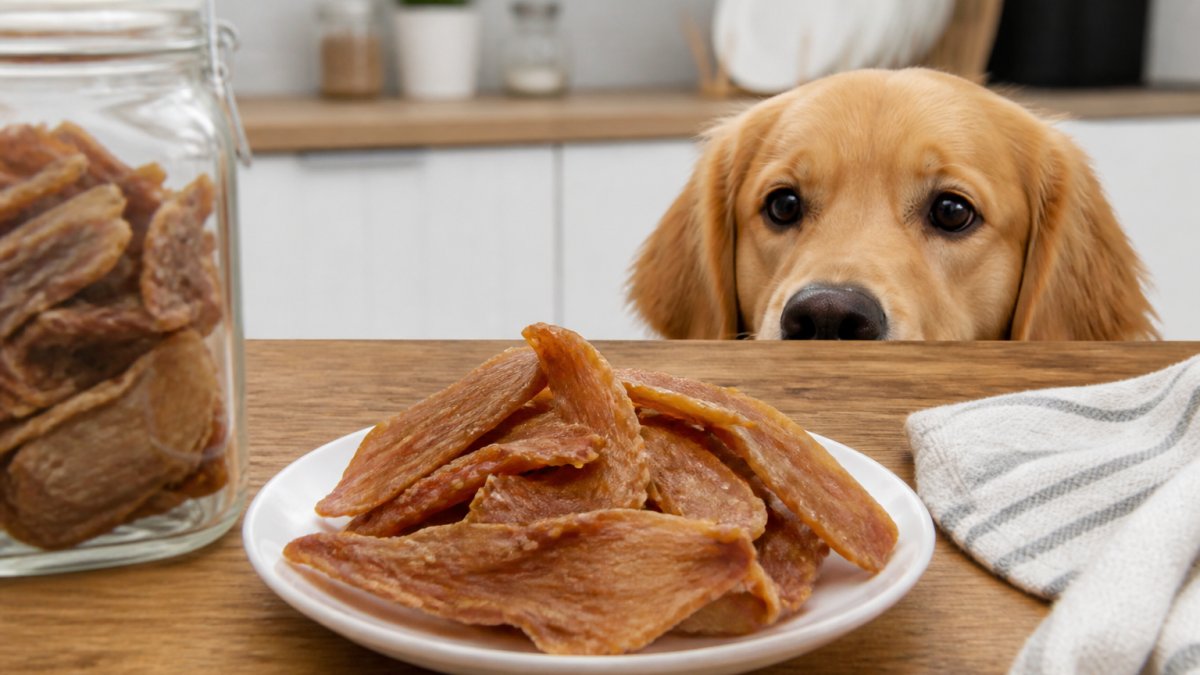
Fresh, dehydrated single-ingredient treats also retain more natural nutrition than heavily processed alternatives that require preservatives and artificial coatings to survive a long shelf life. At Five Local Dogs, we hand-slice 100% U.S.-sourced chicken and dehydrate it in small batches.
Nutritional Adequacy and Label Claims: What Is and Isn't Regulated
Here is where many pet owners get confused: treats are not held to the same nutritional adequacy standards as complete and balanced dog foods. The Association of American Feed Control Officials (AAFCO) establishes the model regulations for pet food and treat labeling, which are then adopted by state regulators and enforced by the U.S. Food and Drug Administration (FDA).
The Nutritional Adequacy Statement: Why Treats Don't Carry One
A complete and balanced dog food label must include an AAFCO nutritional adequacy statement, a formal declaration that the product meets the nutrient profiles for a specific life stage. This statement is backed by either formulation calculations or feeding trials.
Treats, by definition, are not intended to be a sole diet. AAFCO's model regulations classify them as "intermittent feeding" products, meaning they are designed to be fed occasionally and do not need to meet the full nutrient profile. Consequently, a treat label is not required to carry a nutritional adequacy statement.
The 10% Rule and Caloric Density
Because treats are nutritionally incomplete, they should make up no more than 10% of your dog's daily caloric intake. To apply this rule, you need two numbers: your dog's daily maintenance energy requirement and the treat's caloric content.
A typical adult dog needs roughly 30 calories per pound of body weight per day, though this varies with age, activity level, and neuter status. A 30-pound dog needs approximately 900 calories daily, so a single 90-calorie treat maxes out the entire 10% treat budget for the day.
How to Calculate Treat Calories
AAFCO's pet food labeling guidelines require that caloric content be stated in kilocalories per kilogram of product, and most reputable brands also list "kcal per treat" or "kcal per piece" on the package. If the label only lists kcal per kilogram, you can convert it:
Find the kcal per kilogram (e.g., 3,200 kcal/kg).
Convert the treat's weight from grams to kilograms (e.g., a 10-gram treat = 0.01 kg).
Multiply: 3,200 × 0.01 = 32 kcal per treat.
This calculation is essential because a large, dense biscuit can contain more calories than a full cup of kibble. Many owners unknowingly overfeed by relying on visual size alone.
What "Natural," "Premium," and "Human-Grade" Actually Mean
AAFCO does provide a definition for "natural": a feed or ingredient derived solely from plant, animal, or mined sources, not having been produced by or subject to a chemically synthetic process. This definition applies to the ingredient itself, not the final product.
"Premium" and "gourmet" have no regulatory definition whatsoever, they are pure marketing terms. "Human-grade" is more complicated. The FDA has no formal definition for "human-grade" in pet food, but the U.S. Department of Agriculture (USDA) does regulate human food facilities. For a treat to legitimately claim "human-grade," every ingredient must be edible for humans, and the product must be manufactured, stored, and transported in a human-food facility. If a brand makes this claim, it should be able to provide third-party certification or documentation of its facility's status.
The "Natural Flavor" Loophole
One claim to scrutinize closely is "natural flavor." Under AAFCO rules, this term can include a wide range of processing aids, carriers, and solvents used to extract the flavor. It is not the same as a named whole ingredient.
What to Verify Before You Buy
Your best defense is to ignore the adjectives on the front of the package and evaluate the ingredient list, guaranteed analysis, and caloric content for yourself. A treat that carries a clear kcal-per-piece statement, lists a named protein as the first ingredient, and avoids synthetic preservatives will almost always outperform a colorful, chemically laden alternative.
Watch Out If a treat label lacks a guaranteed analysis panel or a caloric statement entirely, treat that as a red flag. Reputable manufacturers include this information voluntarily, even when not strictly required for treats.
Conclusion: Your Checklist for Confident Treat Shopping
What to Check | What to Look For | What to Avoid |
Ingredient list | Named meat first | Fillers, by-products |
Preservatives | Vitamin E, rosemary | BHA, BHT, ethoxyquin |
Ingredient count | 1-3 recognizable items | Long chemical lists |
Source transparency | Named country of origin | Vague sourcing terms |
Caloric density | Listed per treat | Unknown or hidden |
Shopping for treats becomes simple once you know the system. Always read the ingredient list in full, verify the source of the protein, and choose products with the fewest ingredients that still meet your dog's needs.
Frequently Asked Questions
Are 'natural' and 'organic' labels on dog treats regulated?
The term 'natural' on pet food labels is defined by AAFCO, but it's not strictly enforced by the FDA in the same way as human food. 'Organic' is regulated by the USDA and requires certification. For dog treats, a 'natural' claim generally means no artificial flavors, colors, or preservatives, but it doesn't guarantee quality. Always check the ingredient list to confirm what 'natural' means for that specific product.
Why is the order of ingredients important on a dog treat label?
Ingredients are listed in descending order of weight, meaning the first ingredient is the most prevalent. This matters because a treat listing 'chicken' first contains more chicken than one listing 'corn' or 'wheat' first. For high-quality treats, you want a named protein source like 'chicken' or 'beef' at the top, not a grain or by-product. This simple check ensures your dog is getting more of the good stuff and less filler.
How can I tell if a dog treat contains artificial preservatives?
Check the ingredient list for chemical names like BHA, BHT, ethoxyquin, and propyl gallate. These are common artificial preservatives to avoid. Instead, look for natural preservatives like mixed tocopherols (Vitamin E), Vitamin C, or rosemary extract. The phrase 'no artificial preservatives' on the front of the package should be backed up by a clean ingredient list. When in doubt, choose treats with fewer ingredients total, which lowers the chance of hidden additives.
What does the AAFCO statement on a pet food label mean?
An AAFCO statement indicates that a food or treat meets the nutritional standards set for a specific life stage (like 'adult maintenance'). Treats are often exempt from complete and balanced requirements since they aren't meant to be a sole diet. However, a statement that a treat is 'intended for intermittent or supplemental feeding only' is standard. For treats, focus less on the AAFCO statement and more on the ingredient quality and sourcing.
Choosing the right treats means cutting through marketing noise and trusting what the label actually tells you. Five Local Dogs makes that easy with single-ingredient, hand-sliced dehydrated chicken, free from preservatives and artificial coatings, sourced entirely from U.S. farms. Get started with Five Local Dogs and give your dog the wholesome, transparent nutrition they deserve.
SHOP

Comments