
How to Identify Artificial Preservatives in Treats

Table of Contents
What Are Artificial Preservatives in Treats?
Common Artificial Preservatives in Pet Food
Synthetic Antioxidants: BHA, BHT, and Ethoxyquin
Nitrates, Nitrites, and Synthetic Dyes
How to Read Pet Treat Labels Like a Pro
Where everything actually sits on the panel
The 60-second scan, step by step
The ingredient-splitting trick
Claims that sound like guarantees but are not
What a clean label actually looks like
Natural vs. Synthetic Preservatives: What's the Real Difference?
Health Risks of Artificial Additives in Dog Treats
What the mechanisms actually are
The regulatory gap that confuses most owners
Why individual dogs vary so much
The takeaway
Natural Alternatives to Synthetic Preservatives
The Shelf-Life vs. Safety Trade-Off
Benefits of Single-Ingredient Dog Treats
Conclusion
Frequently Asked Questions
Last Updated: September 29, 2026
What Are Artificial Preservatives in Treats?
Artificial preservatives in treats are synthetic chemicals added to pet snacks to slow spoilage, extend shelf life, and keep fats from going rancid. They are man-made, not derived from natural sources, and they show up under names most owners would never recognize on a label.
This guide walks through how to identify artificial preservatives in treats, step by step. You will learn the specific names to look for, how to read a label in under a minute, and what to buy instead.
Here is the part most guides skip: the preservative is rarely the only additive. Treats that use synthetic preservatives often lean on dyes, humectants, and flavor enhancers too. So the label tells you more than just "how preserved" a treat is. It tells you how the whole product was built.
That matters because dogs eat these snacks daily, not once a year.
Common Artificial Preservatives in Pet Food
The most common artificial preservatives in pet food fall into two families: synthetic antioxidants and antimicrobials. Synthetic antioxidants stop fats from turning rancid. Antimicrobials, like nitrates and nitrites, slow bacterial growth.
Both families are legal in pet food at set levels. The question is not whether they are allowed. It is whether you want them in your dog's bowl every day.
Look for these names on the ingredient panel:
BHA (butylated hydroxyanisole)
BHT (butylated hydroxytoluene)
Ethoxyquin
TBHQ (tert-butylhydroquinone)
Sodium nitrate and sodium nitrite
Propylene glycol
Sodium metabisulfite
The FDA's guidance on food and color additives explains how these ingredients are reviewed and approved. The short version: approval sets a maximum level, not a recommendation that your dog eat them daily.
Synthetic Antioxidants: BHA, BHT, and Ethoxyquin
BHA, BHT, and ethoxyquin are the three synthetic antioxidants you will see most often in jerky, kibble, and soft chews. They keep fat from spoiling, which is why manufacturers like them. Fat is the ingredient most likely to go bad first.
Here is the honest trade-off. These three do their job well and cheaply. That is exactly why they are everywhere.
Where you will find them:
BHA and BHT in jerky-style treats and meaty soft chews
Ethoxyquin most often in fish-based products, where fat turns rancid fastest
TBHQ in treats that contain added oils
A common mistake is assuming "no BHA" on the front of the bag means the treat is clean. Flip the bag over. BHT or ethoxyquin may be sitting in the same slot.
Nitrates, Nitrites, and Synthetic Dyes
Nitrates and nitrites preserve cured meats, including some dog treats that mimic bacon or deli meat. They hold color and block bacterial growth. Sodium nitrite is the one to watch for on a pet treat panel.
Synthetic dyes are a separate issue. They add nothing to nutrition. They exist so the treat looks like meat.
Red flags in this group:
Sodium nitrate, sodium nitrite
Yellow 5, Yellow 6, Red 40, Blue 1, Blue 2
Caramel color
"Color added" with no source named
Some dogs react to synthetic dyes with itching, ear issues, or loose stool. If your dog has a sensitive stomach, these are worth cutting first.
How to Read Pet Treat Labels Like a Pro
Reading a pet treat label takes about 60 seconds once you know the order of operations. The trick is to read the back panel before the front. The front is marketing. The back is the recipe.

Where everything actually sits on the panel
Before you can scan for preservatives, you need to know what you are looking at. A pet treat label is not one block of text. It is several, and each one does a different job:
Principal display panel, the front. Brand, product name, net weight, and any marketing claims ("no artificial preservatives," "all natural"). This is the least regulated part of the bag.
Guaranteed analysis, crude protein, fat, fiber, and moisture, expressed as minimums and maximums. It tells you nothing about preservatives, but it tells you how much water is in the treat, which matters for shelf life.
Ingredient list, the actual recipe, listed by weight from heaviest to lightest. This is where preservatives live.
Statement of purpose / nutritional adequacy, whether the treat is complete and balanced or intended for intermittent feeding. Most treats are the latter.
Manufacturer and contact info, who to call if something goes wrong.
The ingredient list is the only panel that answers the preservative question. Everything else is context.
The 60-second scan, step by step
Flip to the ingredient list. It sits below the guaranteed analysis, usually in small print. Ignore the front of the bag entirely on the first pass.
Read the first three ingredients. Ingredients are listed by weight. The first three tell you what the treat mostly is. If the first ingredient is a named meat ("chicken," "beef," "salmon"), you are off to a good start.
Scan for preservative names. Look for BHA, BHT, ethoxyquin, TBHQ, sodium nitrate, sodium nitrite, propylene glycol, and sodium metabisulfite. These are the names that matter.
Check for vague terms. "Natural flavors," "artificial flavors," "color added," and "preserved with..." followed by an unnamed agent are all red flags.
Look for a "best by" date, not just a "made on" date. A short shelf life is often a good sign, it means the maker is not leaning on chemistry to buy time.
Count the total ingredients. Fewer is usually better. A five-ingredient treat has fewer places for a preservative to hide than a thirty-ingredient one.
The FDA's pet food labeling requirements spell out what must appear on the panel. Use that as your checklist.
The ingredient-splitting trick
Here is the mechanic most guides skip. Ingredients are listed by weight, but manufacturers can split a single ingredient into multiple entries to push it down the list. If a treat contains chicken, chicken meal, and chicken fat as three separate line items, each one weighs less individually than it would as a single "chicken" entry, so the combined chicken content can be the largest ingredient in the bag while none of the three entries appears first.
The same logic applies to preservatives. A label might list "mixed tocopherols" and "rosemary extract" separately, making each look like a minor additive, when together they are doing the preservation work. When you scan, group related ingredients mentally before you judge their position.
Claims that sound like guarantees but are not
Front-of-bag claims are where the loopholes live. A few to know:
"No artificial preservatives", this claim is about preservatives specifically. A treat can carry synthetic dyes, humectants like propylene glycol, and artificial flavors and still make this claim truthfully.
"All natural", this term is not tightly defined for pet treats the way it is for some human foods. It generally means no synthetic ingredients were added, but enforcement varies.
"Preservative-free", usually means no preservative was added as a separate ingredient. It does not mean the treat will not spoil, and it does not cover preservatives that arrive as part of a compounded ingredient.
"Made with real chicken", tells you chicken is present. It does not tell you how much, or what else is in the bag.
The pattern is consistent: the bigger the claim on the front, the more you need to verify on the back.
What a clean label actually looks like
A label that names one ingredient and nothing else is the easiest label in the world to read. That is the whole point. When you find a treat whose ingredient list is a single word, "chicken," "beef," "sweet potato", there is no preservative to find, no splitting to untangle, and no claim to verify. The scan takes one second, not sixty.
For everything else, the order of operations above is your filter. Read the back first. Group related ingredients. Treat front-of-bag claims as questions, not answers.
Natural vs. Synthetic Preservatives: What's the Real Difference?
Natural preservatives come from plants, minerals, or fermentation. Synthetic ones are made in a lab. Both slow spoilage. They differ in how they work and how long they last.
Natural options include:
Vitamin E (mixed tocopherols)
Rosemary extract
Vitamin C (ascorbic acid)
Citric acid
Salt and vinegar in cured products
Synthetic options, like BHA and BHT, are stronger and cheaper. A treat preserved with BHT may hold up on a shelf far longer than one preserved with rosemary extract. That is not automatically a good thing.
The USDA's organic regulations restrict which synthetic preservatives can appear in certified organic products. That gives you a shortcut: if a treat carries the organic seal, the preservative list is already narrowed.
What most people miss is that "natural" is not a regulated synonym for "safe." Rosemary extract is natural and generally well tolerated. So is salt, in the right amount. The label word alone does not settle it.
Health Risks of Artificial Additives in Dog Treats
The health risks of artificial additives in dog treats are mostly about long-term, low-level exposure, not one bad snack. That is the uncomfortable part. Nothing happens on day one. The reactions that matter build quietly over months of daily feeding.
What the mechanisms actually are
Most guides list symptoms. Fewer explain why the reactions happen. Here is the mechanism behind each common concern:
Allergic reactions, synthetic dyes and some preservatives can trigger immune responses in sensitive dogs. The signs are usually skin-related: itching, paw licking, ear infections, hives. The mechanism is an overactive immune response to a compound the body does not recognize as food.
Digestive upset, propylene glycol and some antimicrobials can disrupt the gut's normal bacterial balance. Loose stool, gas, and vomiting after treats are the visible result. The mechanism is a shift in gut flora, not a direct toxin.
Cumulative load, this is the one owners underestimate. A dog eating the same preservative across kibble, treats, and chews is not getting a single small dose. They are getting that dose several times a day, every day. The concern is not any one product. It is the total.
Synthetic dye sensitivities, some dogs react to dyes like Yellow 5, Yellow 6, Red 40, Blue 1, and Blue 2 with itching, ear issues, or loose stool. These dyes add nothing to nutrition. They exist so the treat looks like meat.
The ASPCA's animal poison control guidance is a good resource if you suspect a reaction and want to know what to do next.
The regulatory gap that confuses most owners
Here is the angle most guides miss entirely. The word "approved" does not mean the same thing everywhere, and it does not mean what most owners assume.
In the United States, the FDA's guidance on food and color additives reviews additives and sets a maximum allowable level. Approval means the ingredient is permitted up to that level, not that it is recommended, and not that it has been studied for long-term daily exposure in dogs. The maximum is a ceiling, not a target.
The practical consequence: a treat can be fully compliant and still carry a preservative load you would not choose if you saw the total. Compliance and desirability are two different questions. The label answers the first. You have to answer the second.
This is also why "approved" claims on packaging should not end your scan. An ingredient being legal tells you the manufacturer followed the rules. It does not tell you whether the rules were written with daily, lifelong feeding in mind.
Why individual dogs vary so much
Here is the honest caveat. Individual dogs vary enormously. One dog eats a dyed, preserved treat with no issue. Another breaks out in hives. Genetics, existing allergies, gut health, and age all shift the response.
That variability is exactly why blanket claims are unhelpful. "Safe for all dogs" and "toxic to all dogs" are both wrong. The useful question is narrower: does this specific dog react to this specific ingredient?
If your dog has a diagnosed food allergy or a sensitive stomach, the safest move is a limited-ingredient treat with a short panel. Fewer ingredients means fewer variables to isolate when something goes wrong.
Pro Tip Keep a simple log for two weeks. Write down each new treat and any change in stool, scratching, or energy. Patterns show up fast, and your vet can work from real notes instead of memory.
Watch Out A reaction that appears after a new treat is not proof the treat caused it. Dogs react to environment, season, and stress too. The log helps you separate a real pattern from a coincidence, which is why it is worth starting before you suspect a problem, not after.
The takeaway
The risks are real but rarely dramatic. They are cumulative, individual, and tied to how often a dog eats the same additive. The most useful thing you can do is not memorize a list of scary chemicals. It is to reduce the total number of additives your dog sees across everything they eat, and to watch your own dog for the patterns that matter to them.
Natural Alternatives to Synthetic Preservatives
Natural alternatives to synthetic preservatives work by the same logic, just with gentler tools. They slow oxidation and bacterial growth without lab-made chemicals.
The most common natural preservatives:
Mixed tocopherols (vitamin E)
Rosemary extract
Ascorbic acid (vitamin C)
Citric acid
Vinegar in cured products
Proper dehydration - removing moisture is itself a preservative
Dehydration is the one people overlook. Water is what spoils food. A treat dried thoroughly and sealed well does not need a chemical preservative at all. That is how single-ingredient jerky-style treats stay fresh.
The trade-off is shelf life. Natural preservation buys you weeks or months, not years. For a small-batch maker, that is fine. For a product that sits in a warehouse for a year, it is not.
The Shelf-Life vs. Safety Trade-Off
Longer shelf life and fewer additives pull in opposite directions. That tension explains almost every preservative decision a manufacturer makes.
Think about what a preservative actually buys:
Goal | What It Requires | What You Give Up |
18-month shelf life | Strong synthetic antioxidants | A short, clean ingredient list |
6-month shelf life | Natural preservatives or none | Slower distribution, fresher buying |
No preservatives at all | Full dehydration and airtight sealing | You buy smaller amounts, more often |
None of these is wrong. They serve different products. The problem is when a bag claims freshness while carrying a two-year shelf life and a chemical panel to match.
If you want a preservative-free treat, plan for it. Buy smaller bags. Store them sealed and cool. Use them within the window on the label. That is the real cost of clean eating, for dogs and for us.
Benefits of Single-Ingredient Dog Treats
Single-ingredient dog treats solve the label problem by removing the label problem. If the bag says "chicken" and nothing else, there is no preservative to find.
The benefits stack up quickly:
Nothing to decode - one word on the panel
Fewer allergy triggers - easier to isolate what bothers your dog
No preservatives or coatings - the ingredient is the whole product
Easy portion control - you know exactly what you are feeding
Works for picky eaters - real meat is hard to turn down
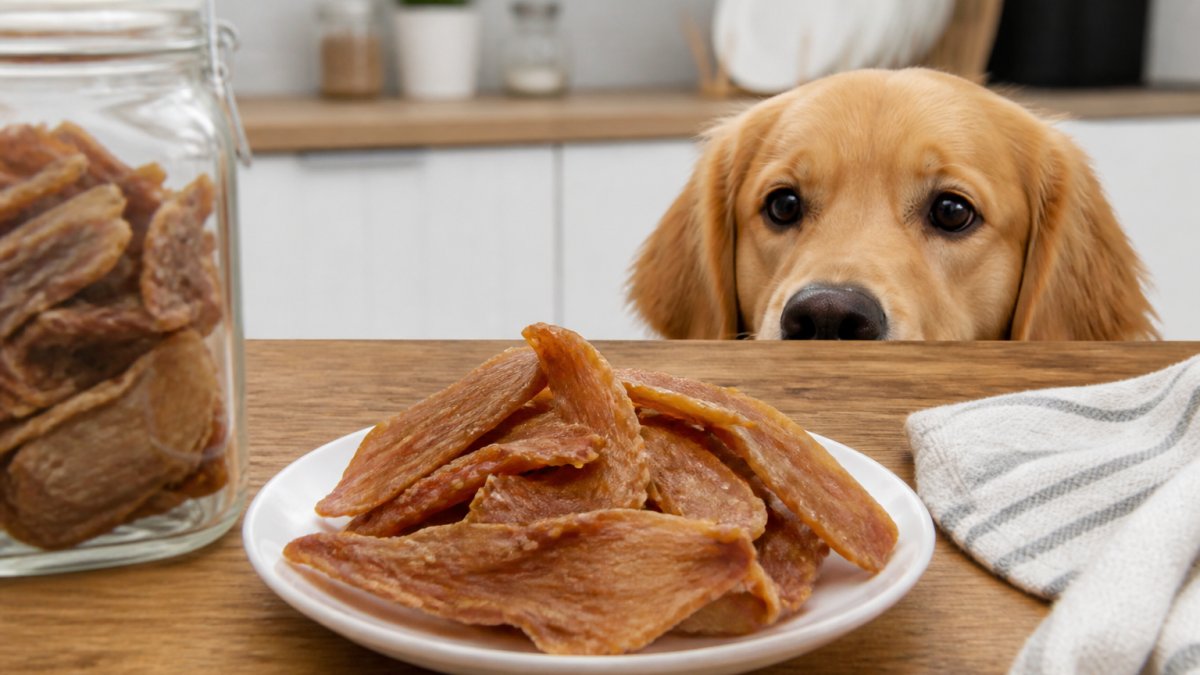
At Five Local Dogs, our treats are single-ingredient dehydrated chicken, hand-sliced and made in small batches. No preservatives. No coatings. Just chicken, dried so it keeps without chemicals. We source 100% from farms in the U.S. because we want to know where it came from.
That is the whole ingredient list. You can read it in one second.
Best For Dogs with sensitive stomachs, diagnosed food allergies, or owners who are tired of decoding long ingredient panels. One ingredient means one thing to watch.
Conclusion
The hardest part of cleaning up your dog's treats is not finding the good ones. It is slowing down long enough to read the back of the bag. Once you know the names, BHA, BHT, ethoxyquin, nitrates, propylene glycol, the scan takes seconds.
Five Local Dogs makes that choice simple. Our single-ingredient dehydrated chicken treats are hand-sliced in small batches, free from preservatives and artificial coatings, and sourced from farms in the U.S. No decoding required, because there is nothing to decode.
SHOP Five Local Dogs and give your dog a treat you can read in one word.
Frequently Asked Questions
What ingredient should I avoid in dog treats?
Avoid treats containing BHA, BHT, ethoxyquin, propylene glycol, and added nitrates or nitrites. These artificial preservatives are used to extend shelf life but have been linked to health concerns in dogs. Also steer clear of generic terms like 'meat meal' or 'animal fat' that can hide lower-quality ingredients. Look for treats with short, recognizable ingredient lists instead.
Are natural preservatives safer than artificial ones for dogs?
Natural preservatives like vitamin E (tocopherols) and rosemary extract are generally considered safer because they come from plant sources and are better absorbed by the body. Artificial preservatives such as BHA and BHT are synthetic and may accumulate in tissues over time. While natural options may shorten shelf life, they support cleaner nutrition and reduce exposure to chemical additives.
How can I tell if a dog treat label is misleading?
Watch for claims like 'natural' or 'premium' without a clear ingredient list. Products may say 'no artificial flavors' but still contain artificial preservatives. Check for split ingredients (e.g., 'chicken' and 'chicken meal' listed separately to hide quantity), vague terms like 'by-products,' and preservatives listed after the first five ingredients. Transparent brands list every ingredient plainly.
What are the benefits of single-ingredient dog treats?
Single-ingredient treats like dehydrated chicken contain no fillers, preservatives, or artificial coatings. They are ideal for dogs with food allergies or sensitive stomachs because you know exactly what you're feeding. They also support cleaner nutrition and make it easier to identify trigger ingredients. Many picky dogs accept them because the flavor is concentrated and natural.
SHOP

Comments