
Avoiding Fillers in Dog Treats: A Label Guide

Table of Contents
Why Fillers in Dog Treats Matter More Than You Think
How to Read Dog Treat Labels Like a Pro
Start With the First Five Ingredients
Decode the Fine Print: What the Fine Print Reveals
Walk Through a Real Treat Label, Line by Line
The Four Questions That Crack Any Label
Where to Find the Numbers That Matter
Dog Treat Ingredients to Avoid: A Numbered Checklist
Artificial Preservatives in Dog Treats: What to Watch For
Fillers vs. Useful Ingredients: How to Tell the Difference
Why Single-Ingredient Dog Treats Simplify the Decision
Your Step-by-Step Shopping Checklist for Filler-Free Treats
How Treat Portion Size and Calories Add Up
Why Treat Calories Are Easy to Miss
How to Do the Math in the Aisle
Portion Control Without the Spreadsheet
Special Cases: Allergies, Sensitive Stomachs, and Picky Eaters
Conclusion
Frequently Asked Questions
Last Updated: October 7, 2026
Why Fillers in Dog Treats Matter More Than You Think
Most dog owners read the front of the bag. "Natural," "wholesome," "real chicken." Then they toss it in the cart. The back of the bag tells a different story.
Avoiding fillers in dog treats is harder than it sounds, and that's by design. Label rules let makers split ingredients into categories that hide what's really inside. A treat can list "chicken" first and still be mostly grain, syrup, and dye.
The stakes are higher than most people realize. Treats often make up a real share of a dog's daily calories, and cheap fillers dilute the nutrition your dog actually needs. For dogs with allergies or sensitive stomachs, the wrong treat can mean a week of digestive misery.
At Five Local Dogs, we make single-ingredient dehydrated chicken treats, so we think about this constantly. Below, we'll show you exactly how to read a dog treat label, which ingredients to avoid, and how to build a simple shopping checklist you can use in any store.
How to Read Dog Treat Labels Like a Pro
Reading a dog treat label starts with one habit: flip the bag over before you look at the price. The ingredient list is where the truth lives, and the first five items tell you most of what you need to know.

Ingredients are listed by weight, from heaviest to lightest. That sounds helpful until you learn the trick: makers can split one ingredient into several entries so none of them lands near the top.
Start With the First Five Ingredients
The first five ingredients are the recipe. If chicken, beef, or salmon leads the list, you're on the right track.
Watch for these red flags in the top five:
A grain or starch listed first (corn, wheat, white flour)
Syrups or sugars (corn syrup, cane molasses)
Fat or "digest" as a top item
Vague terms like "meat meal" with no animal named
A treat that opens with "ground yellow corn, wheat flour, corn syrup" is a cookie with a dog on the bag. A treat that opens with "chicken" and ends there is a different product entirely.
Decode the Fine Print: What the Fine Print Reveals
Splitting is the sneaky part. A label might list "ground corn, corn gluten meal, corn bran." That's three entries, all corn. Together they could outweigh the chicken sitting at the top.
The FDA's guidance on pet food labeling requires ingredients to be listed by weight, but it doesn't stop makers from splitting one grain into three names.
So count the family, not the entry. If corn, wheat, or soy shows up more than once under different names, treat it as one big filler.
Walk Through a Real Treat Label, Line by Line
Here's the part most guides skip: what a treat label actually looks like when you're standing in the aisle. Take a common soft chew biscuit and read it top to bottom.
Sample ingredient list (typical mass-market soft treat):
Ground wheat
Chicken meal
Corn syrup
Glycerin
Wheat gluten
Beef fat (preserved with BHA)
Salt
Red 40
BHA
Now decode it the way a label-literate owner would:
Line 1, ground wheat. The heaviest ingredient by weight is a grain, not a protein. That alone tells you this is a starch-forward treat.
Line 2, chicken meal. A named protein, which is good, but it sits second behind wheat.
Line 3, corn syrup. Sugar, used to make a bland base palatable and to keep the chew soft.
Line 4, glycerin. A humectant that holds moisture so the treat stays pliable on the shelf. Not toxic, but it's there for texture and shelf life, not nutrition.
Line 5, wheat gluten. The same grain family as line 1, wearing a different name. Count wheat once, and it now clearly dominates the recipe.
Line 6, beef fat with BHA. Fat is a legitimate energy source, but the parenthetical tells you a synthetic preservative is doing the shelf-life work.
Line 7, salt. Flavor and preservation. Fine in trace amounts, less so when it stacks with other sodium sources.
Lines 8 and 9, Red 40 and BHA. A dye for human eyes and a chemical preservative for the warehouse.
Run the same exercise on a simpler label:
Sample ingredient list (single-ingredient dehydrated chicken):
Chicken
That's the whole list. One named protein, no splitting, no dye, no preservative. The comparison isn't subtle once you've read both side by side.
The Four Questions That Crack Any Label
You don't need to memorize every additive. Ask these four questions in order and most bags sort themselves out:
What is the first ingredient, and is it a named protein? If a grain or syrup leads, the treat is built on filler.
How many times does the same grain family appear? Corn, corn gluten meal, and corn bran are one ingredient in three costumes.
Are there any dyes or synthetic preservatives? Red 40, Yellow 5, Yellow 6, Blue 2, BHA, BHT, ethoxyquin, and propyl gallate are the usual suspects.
How long is the list? A five-ingredient treat you can picture in a kitchen beats a forty-ingredient treat you can't.
Pro Tip Look for the word "and" on the label. "Chicken and chicken meal" is honest. "Chicken, corn, corn gluten meal, corn bran" is the same grain wearing three hats.
Where to Find the Numbers That Matter
Beyond the ingredient list, three panels on the back of the bag do real work:
Guaranteed analysis. Minimum protein and fat, maximum fiber and moisture. Useful for comparing two treats, but remember it's a minimum, not a precise measure.
Calorie statement. Often written as kcal ME (metabolizable energy) per treat or per kilogram. If it's missing, that's a signal the maker would rather you didn't do the math.
Feeding directions. Usually a range by dog weight. Treat these as a ceiling, not a target.
Once you can read those three panels alongside the ingredient list, you can screen any bag in about thirty seconds, which is exactly what the checklist later in this guide is built for.
Dog Treat Ingredients to Avoid: A Numbered Checklist
Here's the short list. If you remember nothing else from this guide, remember these.
Cereal by-products - ground-up grain leftovers with little nutritional value
Peanut hulls and cottonseed hulls - cheap bulk that dogs can't digest well
Corn syrup and cane molasses - sugar used to make bland food palatable
White flour - a filler that adds calories, not nutrition
Meat meal and feather meal - unnamed animal parts, often low quality
Artificial colors - Red 40, Yellow 5, Yellow 6, and Blue 2 exist to please you, not your dog
BHA and other chemical preservatives - added to extend shelf life
"Digest" and "animal fat" - vague terms that hide the source
None of these belong in a treat you feed a family member. They exist to cut costs, add bulk, or make old ingredients look fresh.
Watch Out Artificial colors like Red 40 and Yellow 5 are added purely for human appeal. Dogs don't care what color a treat is, so if you see dye on the label, the maker is prioritizing looks over nutrition.
Artificial Preservatives in Dog Treats: What to Watch For
Artificial preservatives in dog treats are the hardest additives to spot because they hide behind initials. BHA, BHT, ethoxyquin, and propyl gallate are the main ones. They keep fats from going rancid so a bag can sit on a shelf for a year.
That long shelf life is the trade-off. Fresh food spoils. Shelf-stable food is preserved.
Natural options exist: mixed tocopherols (a form of vitamin E), rosemary extract, and citric acid. These work, though they don't last as long. For a treat you'll finish in a few weeks, that's fine.
The American Kennel Club's guide to dog treat safety notes that treats should fit your dog's overall diet, which is hard when the label reads like a chemistry set.
Our approach is simpler: no preservatives at all. We hand-slice chicken, dehydrate it in small batches, and that's the whole process.
Fillers vs. Useful Ingredients: How to Tell the Difference
A filler is an ingredient added to add bulk, weight, or shelf life without adding nutrition. A useful ingredient earns its place by feeding your dog something it needs.
That's the clean definition. Here's how to apply it.
Rice, potato, and oats aren't automatically bad. In a complete and balanced diet, they supply energy and fiber. The problem is context. When grain is the first ingredient in a treat, it's filler. When it's a small part of a balanced meal, it's food.
Ask three questions about any ingredient:
Does it feed the dog, or the bottom line?
Would it appear in a home-cooked meal?
Is it there for nutrition or for cost?
Chicken passes all three. Corn syrup fails all three. Most labels sit somewhere in between, which is why reading them takes practice.
Why Single-Ingredient Dog Treats Simplify the Decision
Single-ingredient dog treats remove the guesswork. When the label says "chicken" and nothing else, there's no filler to decode, no dye to question, and no preservative to look up.
That matters most for dogs with allergies or sensitive stomachs. A limited-ingredient treat narrows the variables. If your dog reacts, you know exactly what caused it.
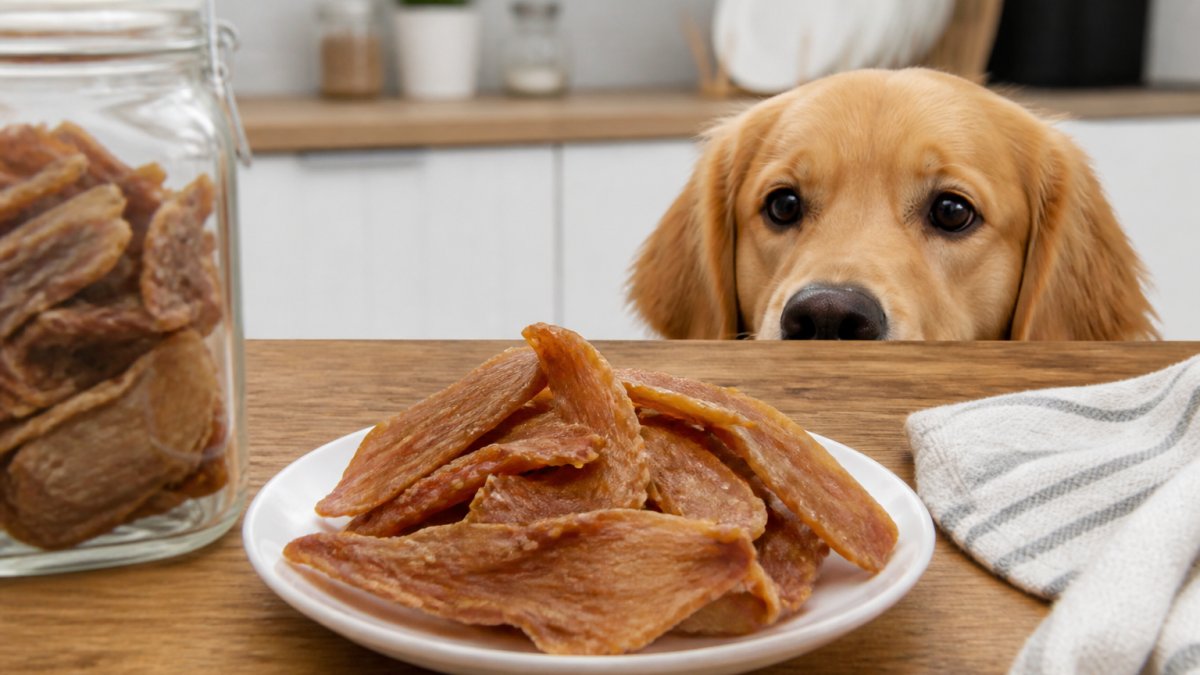
For picky eaters, single-ingredient treats also tend to win. Dehydrated chicken is intensely aromatic, and most dogs find the smell hard to resist. There's no grain coating to turn them off.
The trade-off is shelf life and price. Real food costs more than filler, and it doesn't last forever on a shelf. That's the honest math of it. You're paying for chicken, not for corn and dye.
Your Step-by-Step Shopping Checklist for Filler-Free Treats
Use this checklist in any store. It takes about 30 seconds per bag.
Flip the bag and read the ingredient list first
Confirm a named protein is the first ingredient
Count how many times corn, wheat, or soy appears
Scan for artificial colors (Red 40, Yellow 5, Yellow 6, Blue 2)
Check for BHA, BHT, ethoxyquin, or propyl gallate
Look for vague terms: "meal," "digest," "animal fat"
Count total ingredients. Fewer is usually better
Check the calorie count per treat (more on that next)
If a bag fails two or more checks, put it back. There's no shortage of better options.
Key Takeaway A treat with five ingredients you recognize beats a treat with forty you don't. Simplicity is the fastest filter you have.
How Treat Portion Size and Calories Add Up
Treats should make up no more than about 10 percent of your dog's daily calories. That guideline is repeated across veterinary nutrition guidance, and most owners blow past it without realizing.
Here's the math, worked through for a few common dog sizes. Resting energy needs vary with age, activity, and body condition, so treat these as rough anchors, not prescriptions:
A 10-pound dog needs roughly 250 to 300 calories a day. Ten percent is about 25 to 30 calories, which is one or two small treats.
A 30-pound dog needs roughly 650 to 750 calories a day. Ten percent is about 65 to 75 calories, which is two to three medium treats.
A 70-pound dog needs roughly 1,100 to 1,300 calories a day. Ten percent is about 110 to 130 calories, which is three to four medium treats.
Now compare that to what's actually in the bag. A typical mass-market biscuit runs 30 to 50 calories. A soft chew can run 50 to 80. A dental chew can run 100 or more. Hand a 15-pound dog three dental chews and you've likely blown past the entire daily treat budget before dinner.
Why Treat Calories Are Easy to Miss
Three things make treat calories invisible:
They don't come off the food bowl. Most owners add treats on top of the daily meal rather than subtracting from it, so the calories stack.
The bag rarely leads with the number. Calorie statements are often in small print, per kilogram rather than per treat, which forces you to do a conversion.
Treats are social. Training sessions, good behavior, and "just because" moments add up fast. Ten small training treats in a session can equal a meal.
How to Do the Math in the Aisle
You don't need a calculator. Two steps cover most cases:
Find the calorie statement. Look for "kcal ME" on the guaranteed analysis panel. If it's per kilogram, divide by 1,000 to get calories per gram, then multiply by the treat's weight in grams.
Divide your dog's daily treat budget by the treat's calories. A 30-pound dog with a 70-calorie budget and a 35-calorie treat gets two treats a day. That's the whole allowance.
If the bag doesn't list calories at all, treat that as a soft warning. You can still feed the treat, but you're guessing, and guessing is how dogs gain weight on treats alone.
Portion Control Without the Spreadsheet
A few habits keep treats inside the budget without turning feeding into accounting:
Break treats in half. A broken biscuit delivers the same reward for half the calories.
Use a portion of the daily kibble as training rewards. It comes out of the meal, not on top of it.
Reserve high-calorie chews for occasional use, not daily routine.
Weigh your dog monthly. A pound or two of drift is the earliest signal that treats are outpacing activity.
Subtract, don't add. If your dog gets 70 calories of treats, pull roughly 70 calories from the bowl.
A common pattern among owners who successfully keep their dogs lean is simple: they treat the daily calorie budget as fixed and decide where it goes, rather than treating treats as free.
Key Takeaway Treats are part of the diet, not a bonus on top of it. Do the calorie math once for your dog's size, and every bag in the store gets easier to judge.
Special Cases: Allergies, Sensitive Stomachs, and Picky Eaters
Dogs with diagnosed food allergies need a different approach. Common triggers include chicken, beef, wheat, corn, and soy, so the fix isn't always "more chicken." Work with your vet to identify the protein your dog tolerates.
Sensitive stomachs are trickier. Fillers, dyes, and preservatives are frequent culprits, but so is overfeeding. Start with one new treat at a time, in small amounts, and watch for a few days.
Picky eaters respond to smell more than taste. A dehydrated protein with a strong aroma often wins where a dry biscuit fails. No coating needed.
A few rules that hold across all three cases:
Introduce one new treat at a time
Keep portions small at first
Avoid treats with long ingredient lists
Ask your vet before changing a prescription diet
If your dog has a medical condition, your vet's advice beats any label guide, including this one.
Conclusion
Reading labels takes practice, but the payoff is real. Your dog gets nutrition instead of filler, and you stop guessing what's in the bag.
At Five Local Dogs, we keep it simple. Our treats are single-ingredient, hand-sliced chicken, made in small batches with no preservatives and no coatings. Every batch is sourced from farms in the U.S., and we make it fresh so it stays consistent bag to bag.
If you're tired of decoding ingredient lists, start with a treat that only has one. Shop Five Local Dogs and give your dog something you can actually pronounce.
Frequently Asked Questions
What ingredients should I stay away from in dog treats?
Avoid treats listing artificial colors like Red 40, Yellow 5, Yellow 6, or Blue 2, and preservatives such as BHA. Watch for vague terms like 'meat meal,' 'feather meal,' 'cereal by-products,' 'peanut hulls,' 'cottonseed hulls,' and 'corn syrup.' These are common dog treat fillers that add bulk without nutritional value. If the first few ingredients are white flour, corn, or unnamed by-products, the treat is mostly filler. Choose treats with recognizable, named ingredients instead.
How can I tell if a dog treat contains fillers?
Read the ingredient list in order of weight. If the first three to five ingredients include white flour, corn, wheat, soy, rice, potato, or unnamed by-products, the treat relies on fillers. Look for vague terms like 'meat meal' or 'cereal by-products' instead of specific proteins. A short ingredient list with one or two recognizable items is your best signal that fillers are absent. When in doubt, compare the protein percentage to the total weight.
Are grains always fillers in dog treats?
No. Grains like rice, oats, and barley can provide digestible carbohydrates, fiber, and some nutrients. They become fillers when they replace quality protein or appear as vague by-products. A treat with named whole grains and a clear protein source can be nutritious. The problem is low-quality grain fragments, white flour, and corn syrup used to bulk up a treat cheaply. Judge grains by their form and position on the label, not by their presence alone.
Are single-ingredient dog treats a good choice?
Single-ingredient dog treats simplify label reading because there is nothing to decode. A treat made from one recognizable item, such as dehydrated chicken, contains no fillers, artificial preservatives, or colors. This makes them a strong option for dogs with allergies or sensitive stomachs, since you can isolate exactly what your dog eats. They also work well for picky eaters because the flavor comes from the ingredient itself, not from coatings or additives.
SHOP

Comments